
Leave A Message
If you are interested in our products and want to know more details,please leave a message here,we will reply you as soon as we can.


Automotive Magnetic Core Sourcing: What IATF 16949 and PPAP Mean for Core Suppliers
Automotive magnetic core sourcing is not only about AL and OD. IATF 16949 defines the quality management system automotive customers expect from manufacturing suppliers, while PPAP (Production Part Approval Process) is the evidence package that proves a specific core part can be produced consistently at rate. For nanocrystalline and amorphous CMC or inductor cores used in OBC, DC-DC, and traction-adjacent filters, buyers should require system certification, process control on anneal/AL, material traceability, change notification, and a PPAP level agreed in the purchase contract. Dongguan JH Amorphous Co., Ltd. operates ISO9001:2015 and IATF 16949 systems to support OEM/ODM automotive magnetics programs—not catalog hobby parts with an automotive sticker.
Soft magnetic cores sit in EMI and power paths that affect homologation and EMC compliance, functional safety indirectly (noise into controllers, sensor CT accuracy), thermal risk next to batteries and power stages, and long field life across -40°C to high cabin/underbody temperatures. A core that drifts AL after an undocumented anneal change can reopen EMC failures months after SOP. Purchasing cannot treat nanocrystalline toroids like generic stampings.
| Vehicle domain | Core roles | Buyer pressure points |
|---|---|---|
| Onboard charger | CMC, PFC inductor, DM choke | EMI, heat, packaging |
| DC-DC converter | CMC, transformers, inductors | Wide load, acoustics |
| Inverters / auxiliaries | CM filters, sensors | Vibration, temp, PPAP |
| EVSE charging equipment | Line CMCs, CTs | Standards + volume ramp |
IATF 16949 is an automotive QMS built on ISO 9001 with additional requirements: customer-specific requirements, stronger defect prevention, traceability, and manufacturing process control. For a magnetic core supplier, readiness shows up as: controlled flow from ribbon to anneal to finish to pack; documented work instructions for critical magnetic processes; calibration of AL fixtures and temperature profiling equipment; problem-solving discipline; supplier management for ribbon, cases, and coatings; change control and customer notification pathways. ISO9001:2015 alone is a foundation; automotive OEMs and Tier-1s typically expect IATF 16949 when the part is serial automotive.
Onboarding questions: Does the IATF certificate scope cover the manufacturing site that will ship your cores? How are special characteristics defined for AL, dimensions, and insulation? What is the scrap/rework policy on anneal lots that miss μ/AL windows? How are customer-specific OEM requirements flowed down? Can you show process capability thinking on critical dimensions?
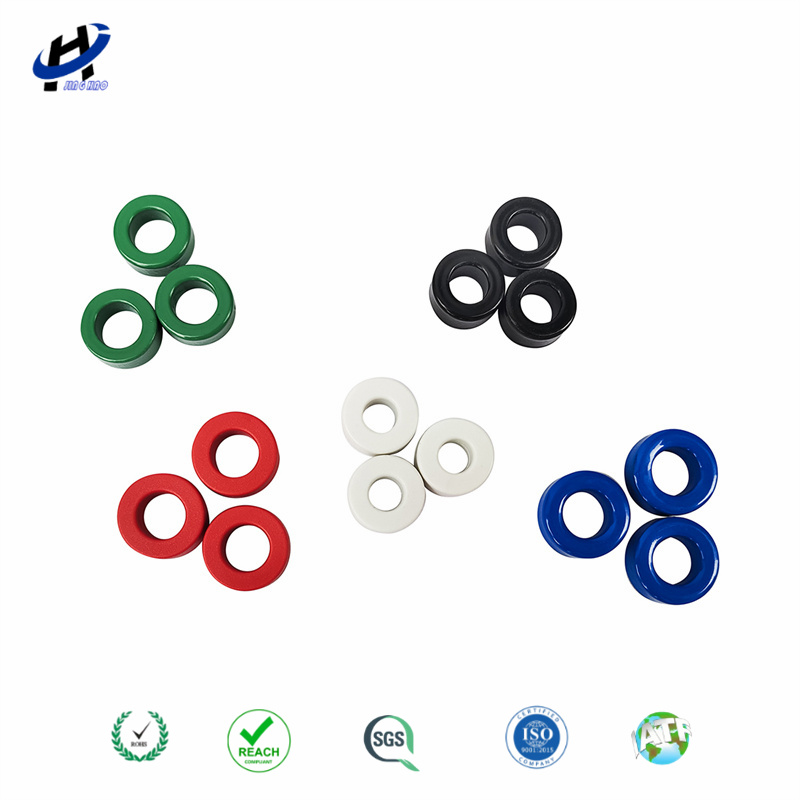
Automotive-facing coated cores—pair material choice with IATF/PPAP documentation, not brochure μ alone.
PPAP is not a single PDF saying “we are good.” Depending on the agreed level, expect: design records / core drawings with tolerances; engineering change documents; process flow diagrams; PFMEA covering anneal, winding-risk interfaces, handling; control plan including AL sampling and visual criteria; MSA on measurement systems; dimensional results; material certifications (alloy, case resin, compliance); performance test results agreed with the customer (AL, impedance samples, hi-pot as applicable); PSW signed.
Magnetics-specific reality: magnetic performance must appear in the control plan, not only OD/ID/HT. A dimensionally perfect toroid with wrong anneal is a wrong part.
Example special characteristics: AL or μ window at stated conditions; dimensional stack-up affecting winding; insulation coverage / edge condition for gapped parts; case material flammability / markings when specified; traceability code retention.
| Process step | Failure mode | PPAP/control focus |
|---|---|---|
| Ribbon incoming | Wrong alloy/insulation lot | Certs, traceability |
| Winding core | Dimensional, tension damage | SPC visuals, capability |
| Anneal / finishing | Wrong grade (CMC vs inductor μ) | Recipe control, AL gates |
| Gapping | Length, burrs, fringing risk | Gap metrology, edge |
| Casing / varnish | Thermal/mechanical weakness | Material UL notes, cure |
| Pack & ship | Moisture, deformation | Packaging specs |
The “μ trap”—shipping a high-μ CMC grade when the drawing intended an inductor-oriented low-μ grade—belongs in PFMEA as a mislabel/mis-anneal risk.
Automotive validation will exercise cold starts near -40°C class; hot soaks where ferrite may derate near ~100–120°C while nanocrystalline alloy Curie ~570°C holds magnetically (assemblies still limited by copper/case, often discussed -40 to +140°C); vibration and shock; EMC with production harnesses. Bs ~1.25 T class nanocrystalline vs ~0.4 T ferrite often matters for high-current CMCs in OBC filters—see the JHNO71.5 EV CMC core used in a German 800 V case—but PPAP still cares how you keep that performance stable lot to lot.
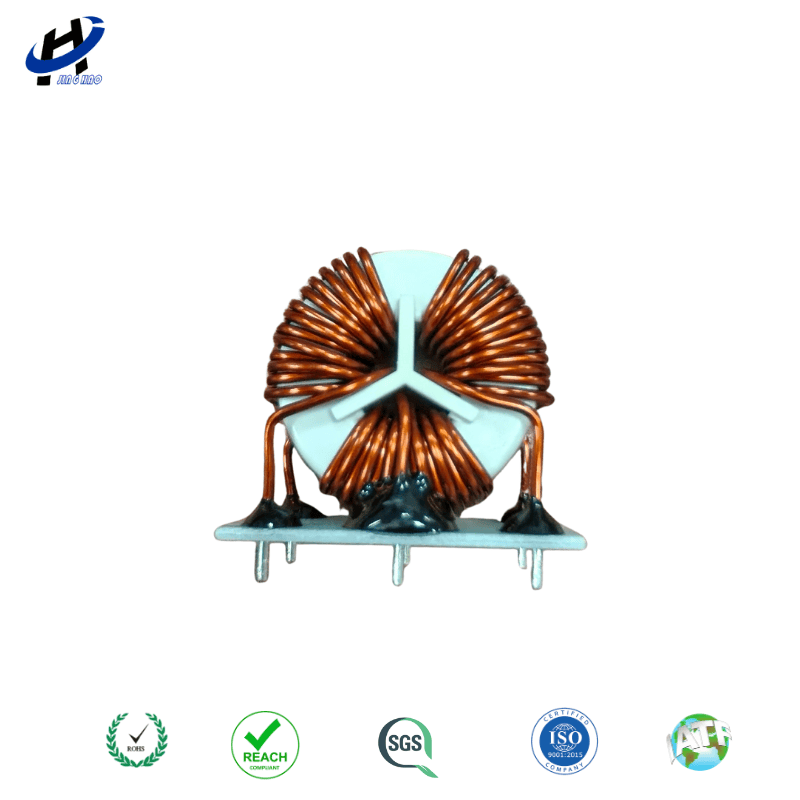
Wound CMC suitable for EV power stages: PPAP cares about process capability as much as AL.
Buyer RFQ should include: application (CMC vs inductor vs CT); electrical targets (L/Z, current, f); environmental targets; annual volume and ramp; PPAP level and customer-specific forms; IMDS / material declaration expectations; packaging and barcode rules.
Supplier response should include: proposed grade family and why; preliminary control plan outline; lead time for PPAP samples vs mass production; change notification commitment; contact path for quality and applications (not only sales).
Tier-1 coordination: Freeze the magnetic grade name on the drawing—not only “nanocrystalline toroid.” Require PCN for anneal recipe, ribbon supplier, insulation system, and AL fixture changes. Keep golden samples for AL correlation when fixtures update. Align winding houses: gap marks and winding starts affect thermal and EMI. Do not dual-source different anneal philosophies without full requalification.
Before full PPAP, screen with: certificate copies with scope pages; example control plan redacted from a similar toroid family; AL histogram from a recent comparable lot; material declaration templates; packaging photo. Dual-source safely means independent PPAP for each manufacturing route, correlated AL fixtures, separate FMEAs, and EMI/thermal delta tests on the finished choke—not only matching OD and “nanocrystalline” text.
Dongguan JH Amorphous (www.amorphousoem.com) encourages joint reviews between purchasing and applications engineering so automotive programs do not optimize piece price while breaking EMI. Field context: Italian OBC thermal/EMI case.
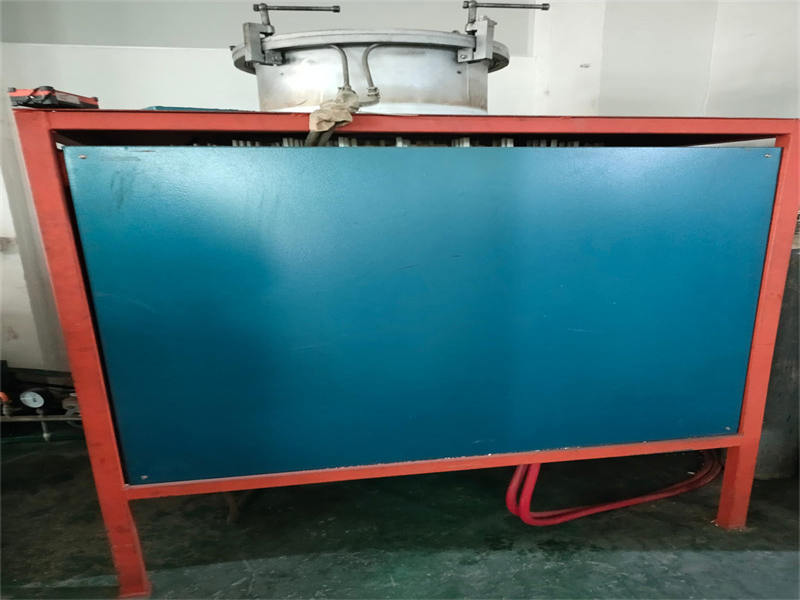
Production cells where lot traceability and change control feed PPAP evidence packs.
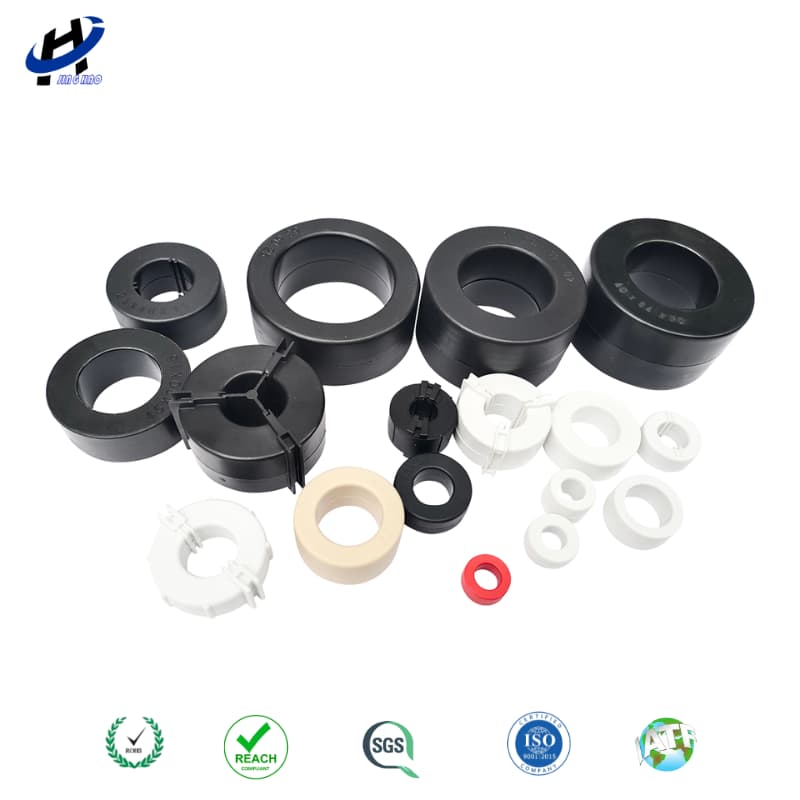
Cased CMC cores for OBC/DC-DC: freeze grade and AL windows in the PPAP control plan.
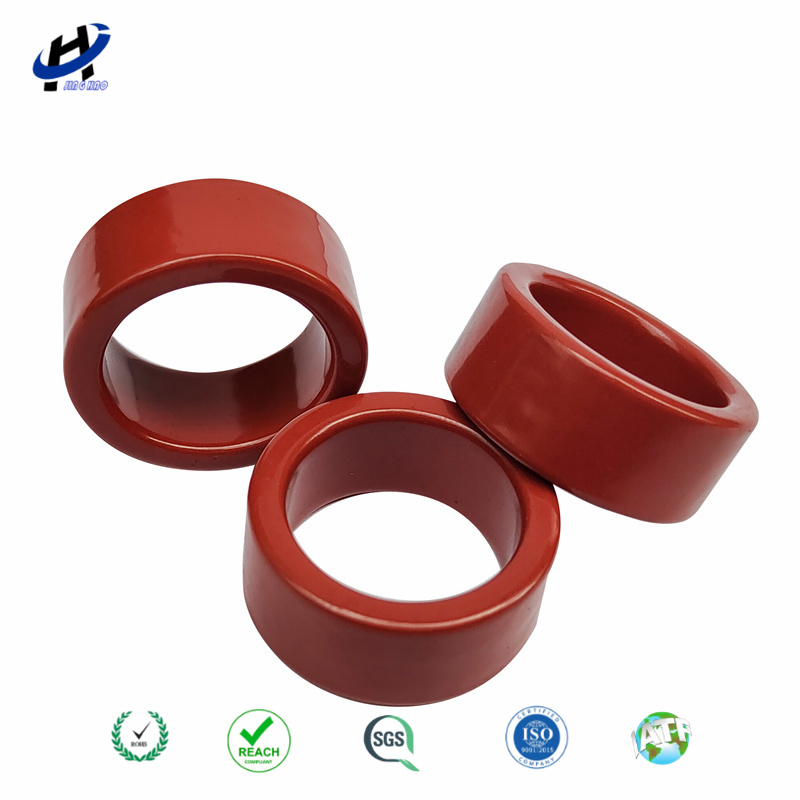
Coating and case materials belong in material declarations and change control.
No. IATF is the management system certificate for the plant. PPAP approves a specific part/process combination for your program.
Usually not at the same level as SOP. Agree interim approval rules for DV samples, then complete PPAP before serial shipments.
You need manufacturing-site accountability. Ask where anneal and final test occur and whose certificate applies.
Buying by OD and μ brochure value without grade intent, AL under bias, and change control—then discovering EMI drift after a quiet process change.
For IATF-aware nanocrystalline or amorphous automotive core quotes, contact julia@amorphousoem.com — www.amorphousoem.com.
 Room 701, Jizhou Tongde Street 45, Shijie Town, Dongguan City, Guangdong Province, China
 +86-180 2701 0075
 sales@amorphousoem.com


 IPv6 network supported |
Sitemap
|
XML
|
blogs
|
Privacy Policy
IPv6 network supported |
Sitemap
|
XML
|
blogs
|
Privacy Policy