
Leave A Message
If you are interested in our products and want to know more details,please leave a message here,we will reply you as soon as we can.

Ceramic vs Organic Insulation on Soft Magnetic Ribbon: What OEM Buyers Should Ask
Ceramic-like inorganic and organic insulation systems on soft magnetic ribbon both aim to prevent interlayer eddy loops and turn-to-ribbon shorts, but they differ in temperature endurance, mechanical toughness, thickness, and process windows. OEM buyers should not treat “insulated ribbon” as a single checkbox. Ask what chemistry is used, how thickness and coverage are controlled, what voltage/insulation tests apply after annealing and winding, and how the insulation survives cutting, gapping, and automatic winding. Match the insulation system to temperature class, hi-pot needs, and production method—especially for nanocrystalline and amorphous OEM/ODM cores used in EV, industrial, and energy applications.
Amorphous and nanocrystalline cores are wound from thin alloy ribbon. If adjacent wraps are electrically shorted over large areas, eddy current paths widen, losses rise, and local heating can damage varnish or enamel on copper windings. Insulation on ribbon (coating, surface insulation, or interlayer dielectric depending on supplier language) reduces conductive contact between wraps while ideally remaining thin enough not to destroy stacking factor.
| Family (buyer language) | Typical character | Where questions focus |
|---|---|---|
| Organic / polymeric | Flexible, process-friendly, thickness trade-offs | Solvent, thermal class, long-term aging |
| Ceramic / inorganic-leaning | Higher temperature reputation, different toughness | Brittleness, coverage after anneal, dusting |
Exact proprietary chemistries vary by mill and finisher. Specify performance—breakdown, temperature, adhesion—rather than only a buzzword.
Nanocrystalline performance depends on anneal (ribbon flatness and IQC also matter—see ribbon uniformity notes). Insulation must survive thermal profiles used to develop the nanocrystalline structure and the magnetic grade (high-μ CMC vs lower-μ inductor-oriented finishing). Ask: Is insulation applied before or after magnetic anneal (or both in stages)? Does the anneal atmosphere interact with the coating? How is coverage verified after heat treatment? Does cutting for gaps create conductive burrs that bypass insulation? A datasheet line that only says “insulated” without process context is incomplete for automotive-grade risk management.
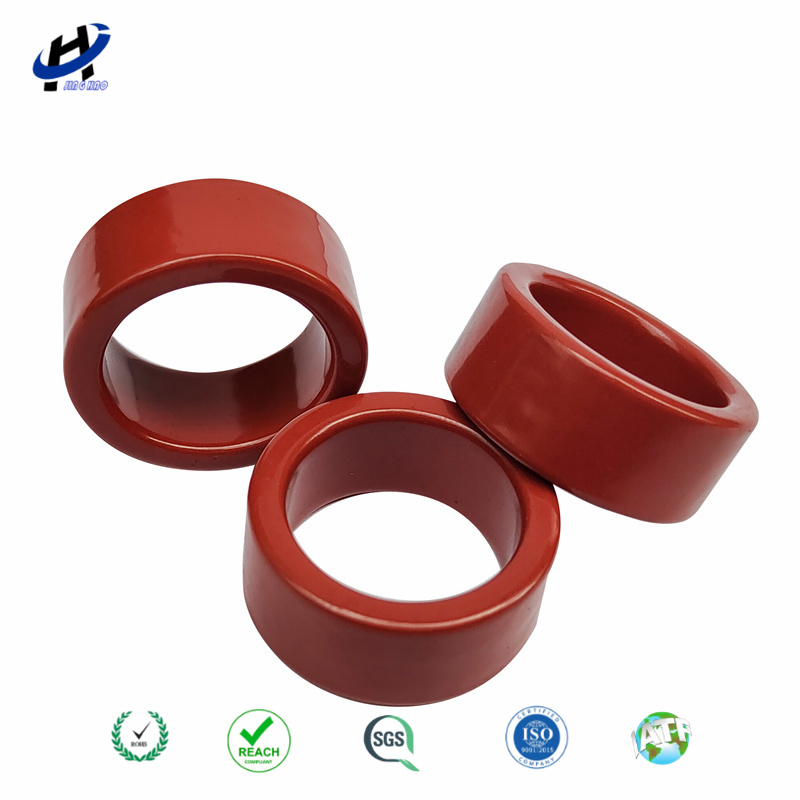
Organic/epoxy-style coatings on nanocrystalline ribbon cores—ask what survives your winding tension and impregnation.
Electrical: What interlayer resistance or breakdown method do you use? After winding copper, what hi-pot regimen do you recommend between winding and core? How do moisture and pollution-degree assumptions affect ratings?
Thermal: Continuous and short-term temperature limits for the insulation system? Compatibility with impregnation varnish cure temperatures? Behavior in −40°C to +140°C class product environments common to finished nanocrystalline assemblies?
Mechanical / production: Does automatic winding abrade the coating? Is there powdering or flaking that contaminates winding machines? How do you handle cut edges on gapped inductor cores?
Quality system: ISO9001:2015 evidence; IATF 16949 when automotive? Lot traceability of ribbon + insulation batch? Change-control when the insulation vendor changes?
Trade-offs in plain language:
Insulation does not replace correct magnetic grade selection. High-μ CMC grades still need proper CM winding and EMI validation. Low-μ inductor grades still need AL vs bias and fringing management. High-temperature capability of nanocrystalline alloy (Curie ~570°C, Bs ~1.25 T class) still requires insulation and case to keep up—pair this with the high-temperature magnetics comparison.
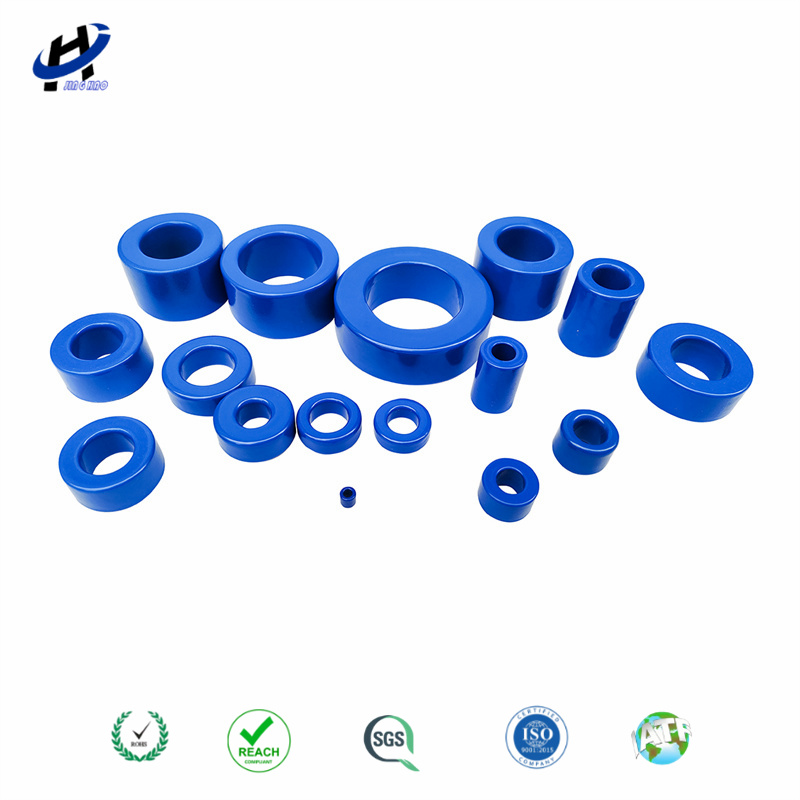
Blue-coated family across OD/HT—coating thickness and edge coverage affect interlaminar short risk.
| Topic | Weak answer | Strong answer |
|---|---|---|
| Chemistry | “Ceramic coated” only | Family + thickness target + cure/anneal note |
| Test | “We hi-pot sometimes” | Method, sample size, fail criteria |
| Heat | “High temp OK” | Limits tied to product ambient/hotspot |
| Edges | “No problem” | Cut-edge procedure for gapped parts |
| Change control | Informal | PCN path, especially IATF customers |
Paste-ready RFQ language: “Soft magnetic ribbon shall include interlayer insulation suitable for [automatic/hand] winding. Supplier shall state insulation family (organic/inorganic), nominal thickness or stacking-factor impact, anneal compatibility, recommended hi-pot between winding and core, and edge treatment for gapped cores. Lot traceability required. Automotive programs require IATF 16949 and PPAP per agreement. Compliance: RoHS/REACH; UL where applicable to case/insulation systems.”
Incoming IQC metrics when voltage stress or automatic winding matters: visual coverage uniformity; edge condition after cutting; abrasion trial on a short winding spike; occasional interlayer resistance sampling; contamination check for flaking in the tray. Run a short pilot lot before freezing the insulation callout—hand-wound prototypes can pass a coating that sheds under production tension.
Require PCNs for insulation system changes—especially on IATF 16949 automotive programs. Dongguan JH Amorphous aligns OEM/ODM supply with ISO9001:2015 and IATF 16949 expectations and supports RoHS/REACH documentation pathways. Ask for the declaration set early in tooling, not after pilot EMI.
Field failure patterns linked to insulation: gradual efficiency loss as interlayer shorts progress; sudden hi-pot failure after thermal shock; localized burn at cut gap edge; winding-machine contamination alarms. Each should trigger a materials review, not only a copper wire diameter change.
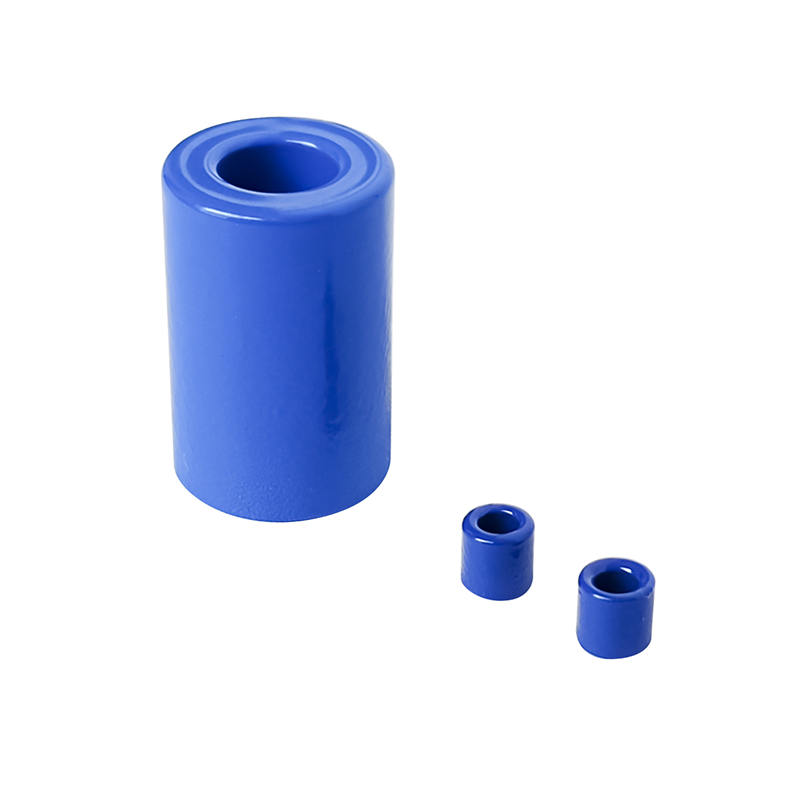
Bead/sleeve coated parts: insulation must survive automatic winding without nicking the ribbon.
No. “Better” depends on temperature, flexibility, thickness budget, and proven process control. Many successful OEM cores use organic systems when validated.
No. It will not turn a high-μ CMC core into a DC-bias-stable power inductor.
Ferrites are sintered ceramics, not wound ribbon; interlayer ribbon insulation is a wound-ribbon topic. Ferrite has its own coating practices for corrosion and creepage.
Higher than expected core loss/heat, burn marks at edges, intermittent hi-pot fails, and sometimes EMI changes if impedance drifts with temperature.
If you are writing an RFQ and need clear ribbon-insulation ask items, send winding process and hi-pot targets to julia@amorphousoem.com — www.amorphousoem.com.
 Room 701, Jizhou Tongde Street 45, Shijie Town, Dongguan City, Guangdong Province, China
 +86-180 2701 0075
 sales@amorphousoem.com


 IPv6 network supported |
Sitemap
|
XML
|
blogs
|
Privacy Policy
IPv6 network supported |
Sitemap
|
XML
|
blogs
|
Privacy Policy