Common Mode Choke Selection Guide for Power Supplies: How to Choose Nanocrystalline Cores for EMI Suppression
Sep 20, 2026
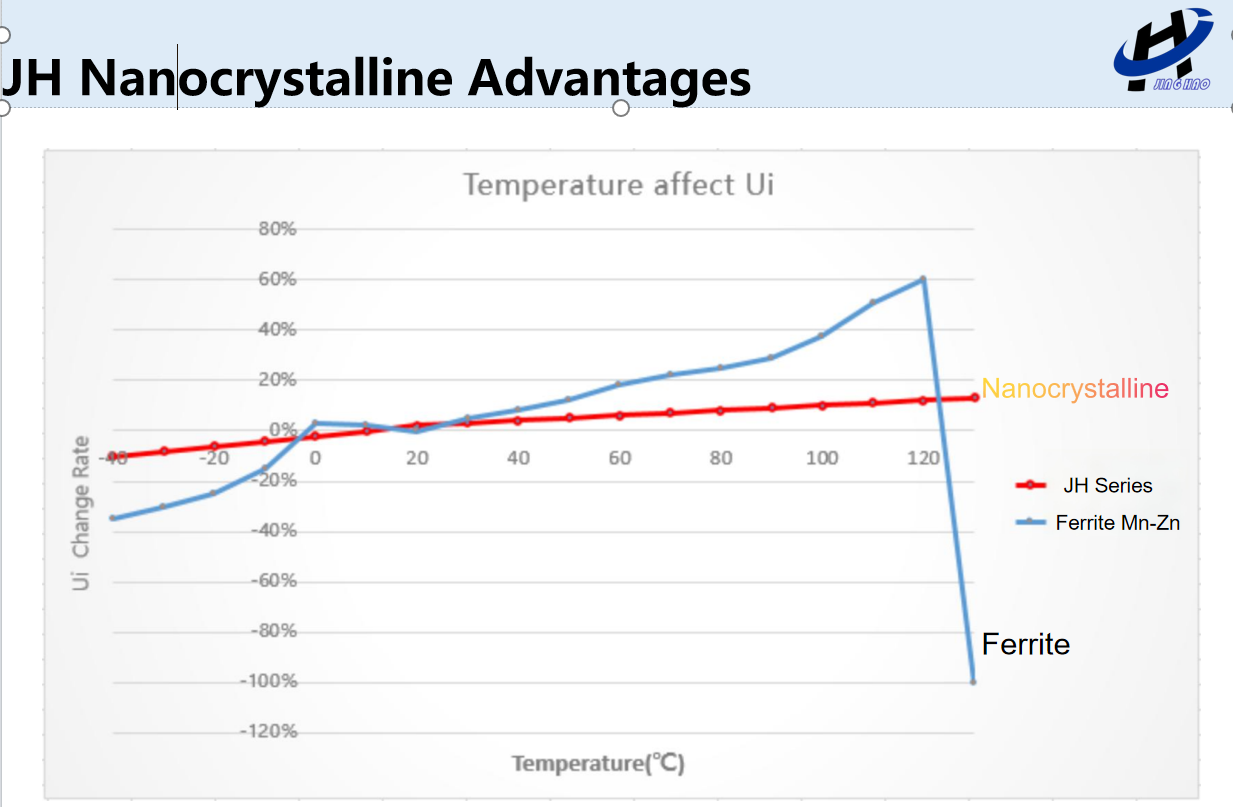
A common mode choke (CMC) suppresses EMI by presenting high impedance to noise currents that flow in the same direction on both lines, while allowing differential power current to pass with low loss. For most switch-mode power supplies, EV chargers, and industrial drives, the right CMC is sized by required impedance over the noise band (often 150 kHz–30 MHz), current rating without saturation, temperature rise, and core material. Iron-based nanocrystalline CMC cores typically outperform Mn-Zn ferrite when you need high permeability at lower frequencies, high saturation flux density (~1.25 T), and stable inductance from about −40°C to +140°C. Ferrite remains useful at very high frequencies when current is modest. Match the core’s AL, OD/ID/HT, and casing to your winding, CISPR/EN limits, and mechanical constraints—then verify insertion loss on the finished choke.
What Is a Common Mode Choke and How Does It Reduce EMI?
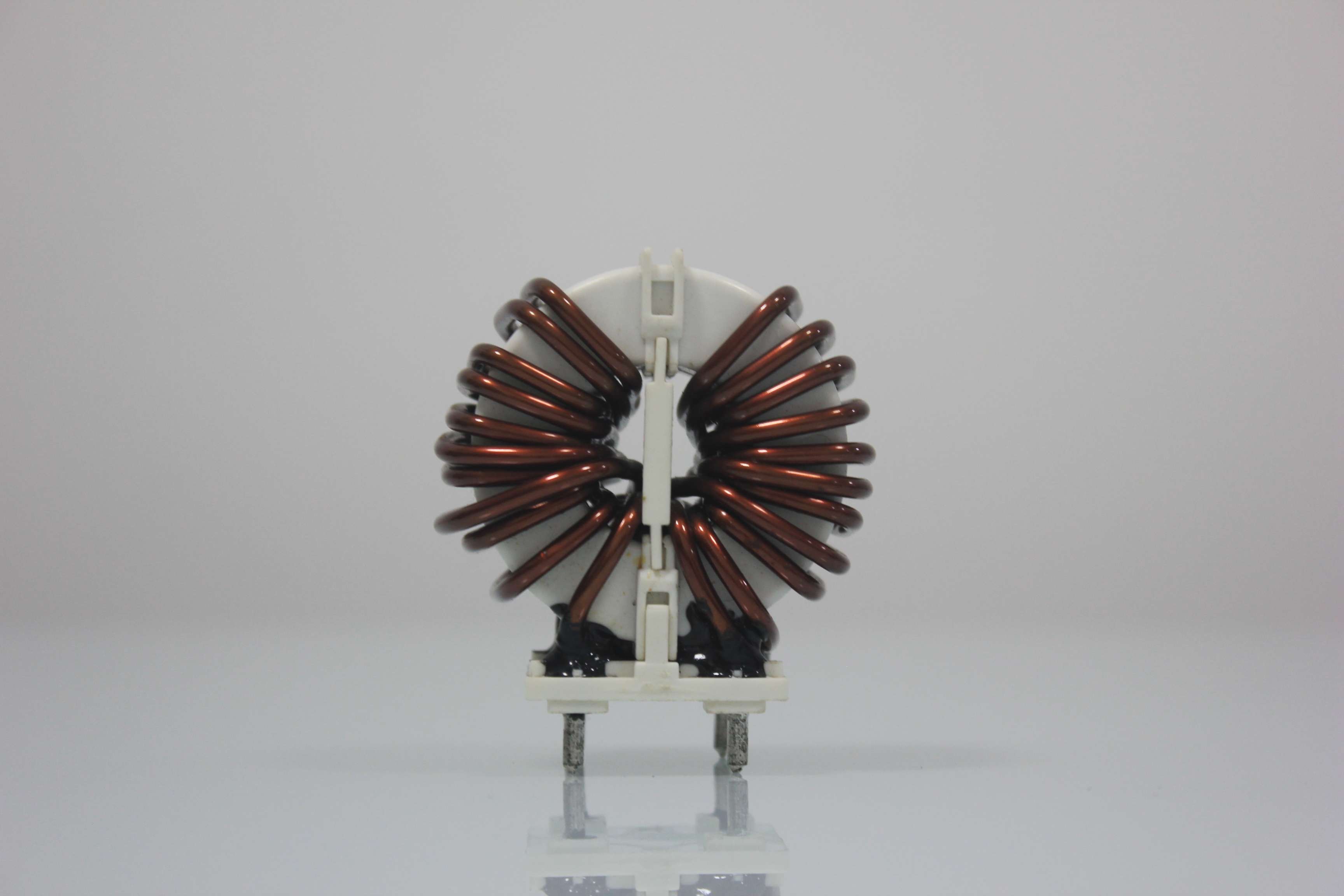
A common mode choke is a magnetic component wound so that the magnetic fields from the two (or more) power conductors cancel for differential (normal) current and add for common-mode noise. That means:
Differential mode current (the useful load current) sees mainly leakage inductance and copper resistance.
Common mode current (noise returning through earth or chassis) sees the full magnetizing inductance of the core.
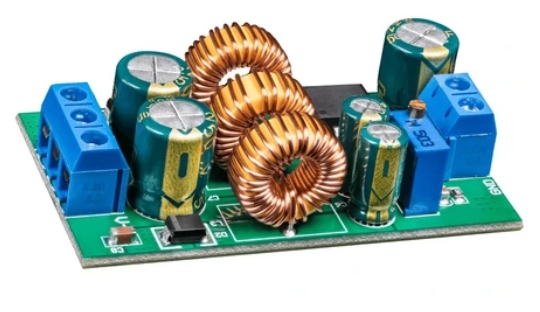
In practical EMI filters for AC/DC and DC/DC power supplies, CMCs sit with Y-capacitors and sometimes X-caps to form a π or T network. The choke’s job is to raise common-mode impedance across the band where your converter’s switching harmonics fail CISPR 32, CISPR 25, EN 55011, or similar limits.
How common mode chokes reduce EMI in one sentence: they convert unwanted common-mode RF energy into a magnetic field in the core and then into heat (core + copper loss), so less noise voltage appears at the line ports.
Engineers searching “how do common mode chokes reduce EMI” usually need this mechanism plus a selection method—not a product brochure. The rest of this guide walks through that selection method with nanocrystalline and amorphous options used in OEM/ODM production at Dongguan JH Amorphous Co., Ltd.
When Nanocrystalline Beats Ferrite in a CMC
Material choice is the first fork in a common mode choke selection guide for power supplies.
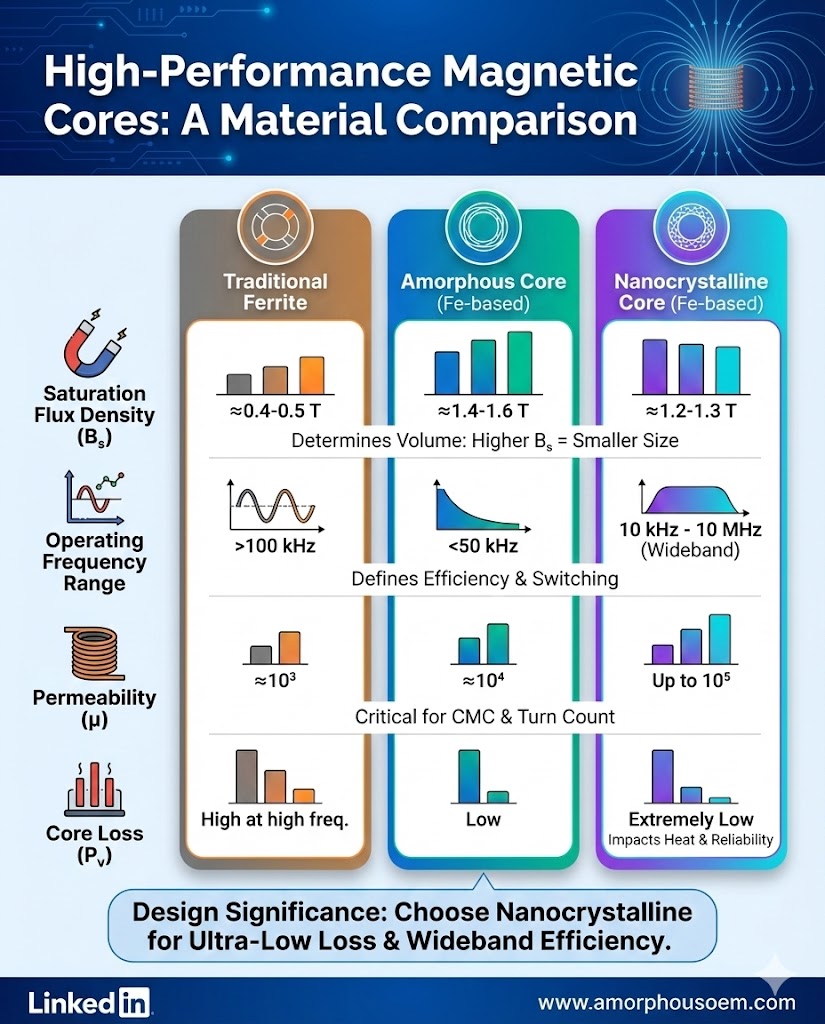
Parameter
Mn-Zn ferrite CMC
Iron-based nanocrystalline CMC
Design implication
Saturation Bs
~0.4 T
~1.25 T
Nanocrystalline handles higher peak common-mode / bias before μ collapses
Initial permeability
~2,000–15,000
~80,000–190,000
Fewer turns for the same L; lower copper loss
Useful band (typical CMC)
Strong mid–high MHz
Strong 10 kHz–several MHz
Nano for low-frequency EMI & high current; ferrite for HF when size allows stack
Curie / thermal
Derates hard near 100–120°C
Stable to ~140°C (Curie ~570°C)
Automotive OBC, engine bay, liquid-cooled PSU front-ends
Mechanical
Brittle, stack-friendly
Thin ribbon; needs case / varnish
Prefer PBT UL94-V0 cased toroids for winding stress
Rule of thumb used by power-electronics teams we support:
High current or strong DC bias / surge → nanocrystalline (or amorphous where frequency is lower).
Very high frequency, modest current, cost-sensitive consumer SMPS → ferrite may still win.
Broadband industrial / EV / server PSU EMI → nanocrystalline CMC core is often the first sample we ship.
This is consistent with field cases already published on our blog (Italian 22 kW OBC, German 800 V heavy-duty EV filter), where ferrite stacks saturated or derated at temperature and a single nanocrystalline toroid restored insertion loss margin.
Step-by-Step: How to Select a Common Mode Choke for EMI Suppression
Use this sequence instead of buying by OD alone.
1. Capture the noise problem, not just the wattage
Topology and switching frequency (PFC, LLC, TTPFC, SiC hard-switching, etc.)
Failed frequency bands from the EMI scan (e.g., 150–500 kHz vs 5–30 MHz)
Line configuration: 1-phase, 3-phase, DC bus CMC, or signal CMC
Standards: CISPR 25 Class 5, EN 55032 Class B, ISO 7637, etc.
If your failure is concentrated below ~1 MHz with high line current, nanocrystalline permeability is usually decisive. If the failure is only above ~10 MHz with low CM current, ferrite or mixed filters may be enough.
2. Fix the continuous and peak current
The winding must carry I_rms continuously and survive I_peak (inrush, load dump, short-circuit ride-through) without magnetic saturation that collapses common-mode impedance.
Nanocrystalline’s higher Bs gives more headroom than ferrite for the same cross-section (Ae). That is why “high current common mode choke suppliers” searches increasingly land on nanocrystalline OEM cores rather than multi-stack ferrite.
3. Target impedance / inductance over the band
From filter simulation or a rule-of-thumb L·C product with your Y-caps, estimate required common-mode impedance Z_cm(f). Convert to a minimum inductance at a reference frequency (often 10 kHz or 100 kHz).
Then check the core AL value (nH/N² or µH/N²). High-μ nanocrystalline cores reach high L with fewer turns—critical when copper fill and temperature rise are tight.
4. Size the geometry (OD × ID × HT)
OD / ID: winding window and leakage (affects residual differential inductance)
HT (height): enclosure clearance—many OBCs and PSUs fail mechanically before they fail magnetically
Ae: saturation and thermal mass
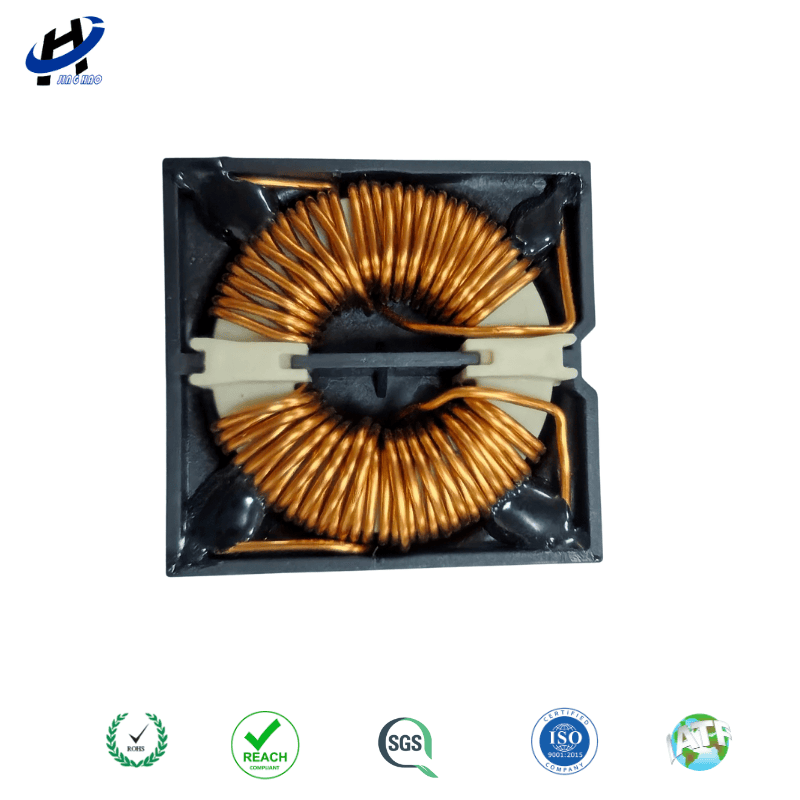
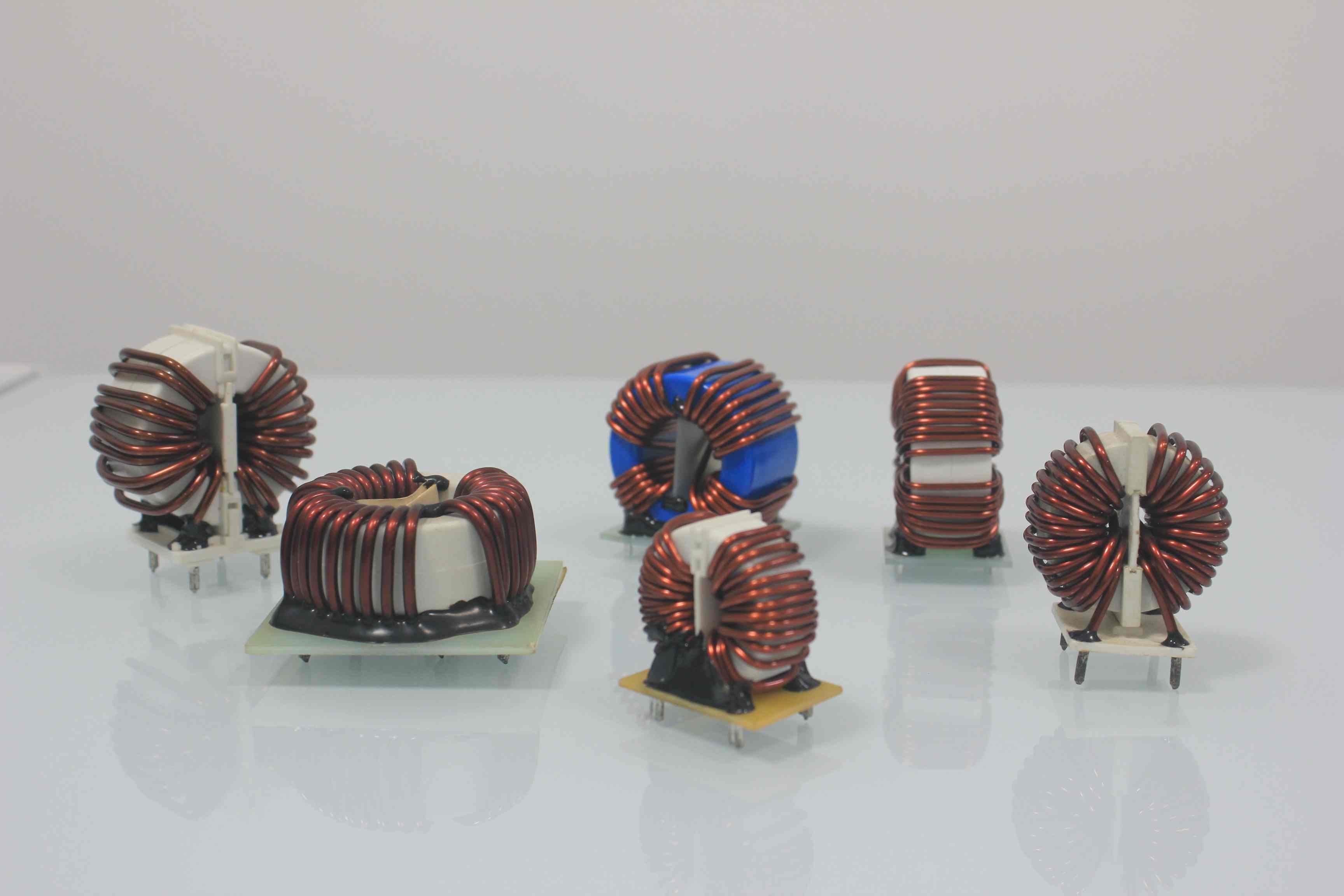
Example families on our catalog include compact ~54 mm EV/OBC CMC cores and larger ~71.5 mm high-power units for 350 kW-class charging filters. Always confirm the exact datasheet AL, Ae, and case rating rather than copying a competitor’s OD.
5. Specify the case, varnish, and winding process
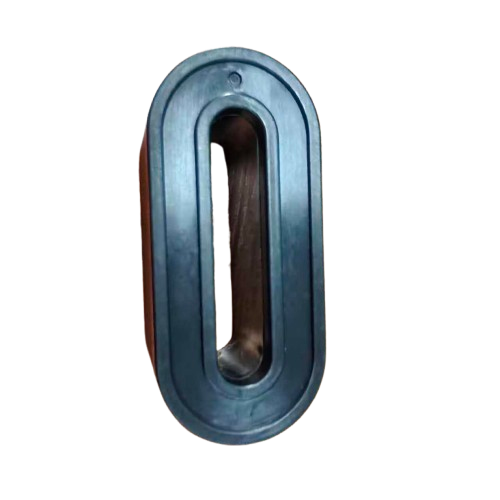
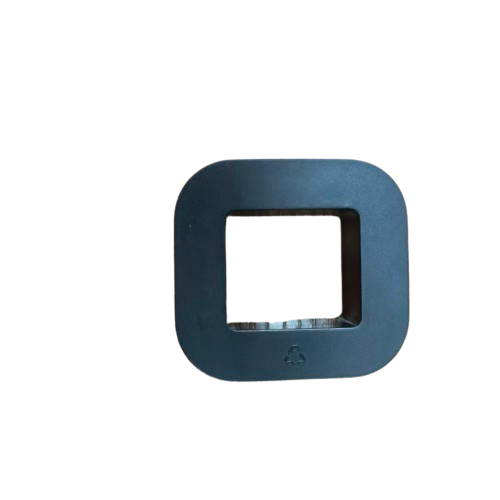
Nanocrystalline ribbon is thin and stress-sensitive. A square-top PBT case (UL94-V0, continuous ~140°C) protects permeability from winding pressure. For some designs, varnish curing before casing further stabilizes performance after copper winding—an issue we documented separately for cased nanocrystalline cores.
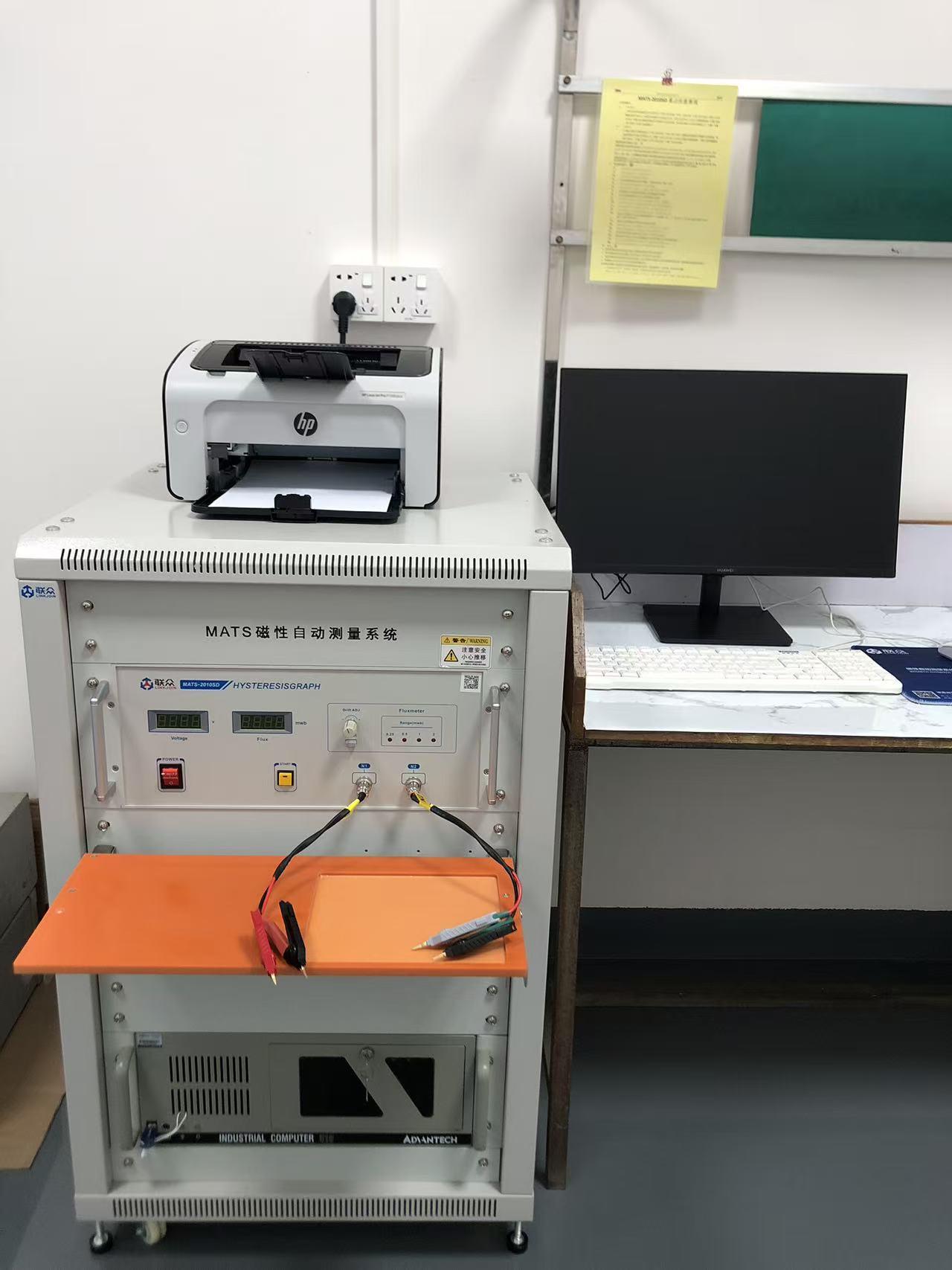
6. Prototype, measure insertion loss, then freeze the BOM
Lab AL ≠ finished choke under bias and temperature. Measure:
Open-circuit inductance vs frequency
Insertion loss (S21) in a 50 Ω or LISN-representative fixture
Temperature rise at rated I_rms
Inductance drift after thermal shock (−40°C / +125°C or your OEM cycle)
Only then lock turns, wire gauge (flat wire / multi-strand), and core batch.
Application Cheatsheet: Power Supplies, EV, and Line Filters
Switch-mode and server power supplies
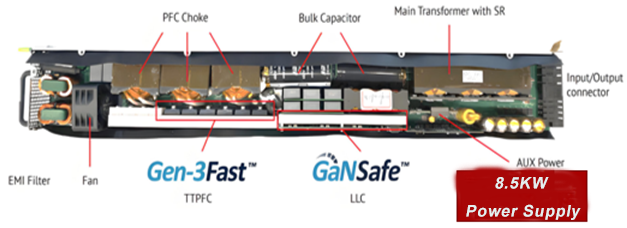
Front-end CMCs in 3–8.5 kW+ PSUs sit in poor airflow even when semiconductors are liquid-cooled. Low core loss and stable μ matter more than brochure permeability. Nanocrystalline CMC cores help hold EMI margin when PFC moves toward 40–100 kHz.
EV on-board chargers and DC fast charge filters
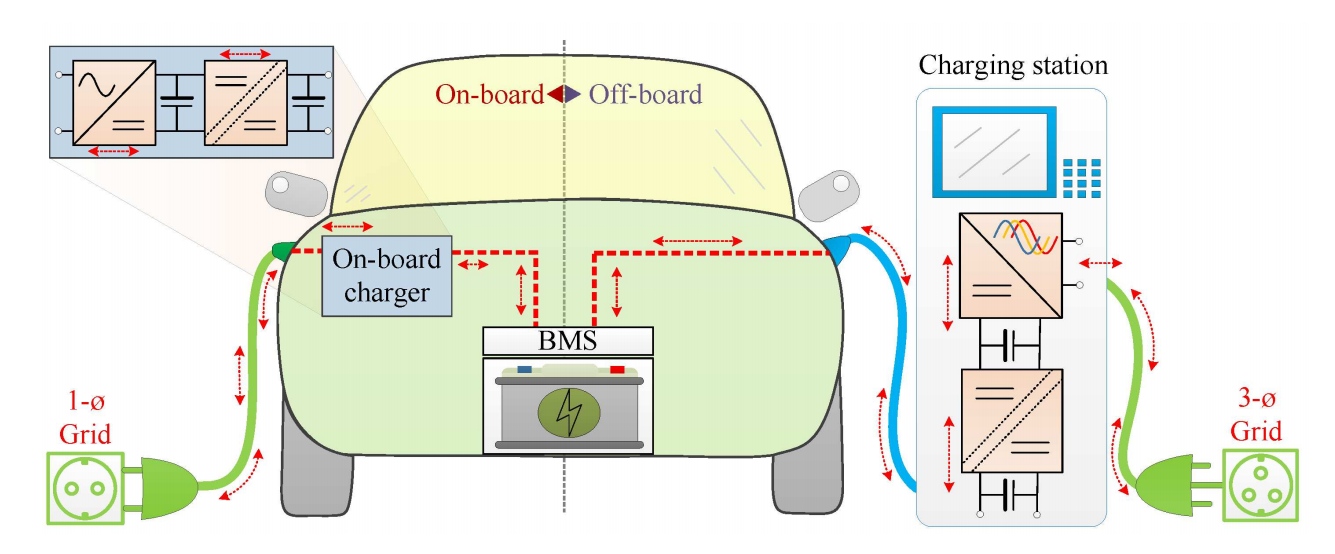
High current, wide temperature, vibration, and CISPR 25 / ISO requirements favor cased nanocrystalline toroids. One well-sized nano core often replaces a ferrite stack and recovers height clearance.
Industrial motor drives and servo inverters
PWM edges create strong common-mode currents on motor cables. Select for continuous current, dv/dt immunity of the insulation system, and mechanical mounting. Amorphous cores can still appear in lower-frequency filter chokes; nanocrystalline dominates broadband CMC stages.
Medical and precision power
Leakage, acoustic noise, and batch consistency matter. Specify tight AL tolerance and documented process control (ISO 9001 / IATF 16949 supply chain).
FAQ
Q1: What is the best common mode choke core material for industrial power supplies?
For high current and low-frequency EMI, iron-based nanocrystalline is usually preferred. Ferrite remains competitive for high-frequency, lower-current stages. Many filters use both in cascade.
Q2: How do I select a common mode choke for EMI suppression quickly?
Define failed bands → set I_rms/I_peak → estimate Z_cm → pick material → size OD/ID/HT from AL and Ae → case the core → measure insertion loss under bias and temperature.
Q3: Where can I get high current common mode choke cores with datasheets?
OEM/ODM manufacturers such as Dongguan JH Amorphous supply nanocrystalline and amorphous CMC cores with drawings, AL data, and sample lead times. Contact julia@amorphousoem.com with your impedance curve and envelope.
Q4: Do nanocrystalline common mode chokes always replace ferrite?
No. Replace when ferrite saturates, overheats, or needs too many stacks. Keep ferrite when the noise is purely high-frequency and current is modest.
Q5: What certifications should a CMC core supplier hold?
Look for ISO 9001:2015, automotive IATF 16949 where relevant, and materials meeting RoHS / REACH / UL-related casing requirements.
Internal links to add on publish
Product: nanocrystalline CMC cores for EV power units — https://www.amorphousoem.com/product/jhno-nanocrystalline-common-mode-choke-core-for-ev-power-units
Product: JHNO71.5 high-power CMC core — https://www.amorphousoem.com/product/jhno71529630-nanocrystalline-common-mode-choke-core-for-ev-power-units
Related blog: Italian EV OBC thermal & EMI case
Related blog: German 800 V heavy-duty EV EMI case
Related blog: magnetic saturation under high current
Related blog: varnish curing before casing
If you are sizing a CMC for a new PSU, OBC, or drive and need AL data or a matched nanocrystalline / amorphous core sample, send your noise scan summary, current waveform, and mechanical envelope to julia@amorphousoem.com.
Dongguan JH Amorphous Co., Ltd.
Room 701, Jizhou Tongde Street 45, Shijie Town, Dongguan City, Guangdong Province, China
Web: www.amorphousoem.com
Julia | julia@amorphousoem.com | www.amorphousoem.com | Dongguan JH Amorphous Co., Ltd.
Read More



 Room 701, Jizhou Tongde Street 45, Shijie Town, Dongguan City, Guangdong Province, China
 +86-180 2701 0075
 sales@amorphousoem.com


 IPv6 network supported |
Sitemap
|
XML
|
blogs
|
Privacy Policy
IPv6 network supported |
Sitemap
|
XML
|
blogs
|
Privacy Policy