homepage
Leave A Message
If you are interested in our products and want to know more details,please leave a message here,we will reply you as soon as we can.
submit
banner
Home

common mode choke

common mode choke

  • Ferrite vs Nanocrystalline Cores for EMI and CMC: When Each Wins (and What to Freeze Before You Switch)
    Ferrite vs Nanocrystalline Cores for EMI and CMC: When Each Wins (and What to Freeze Before You Switch)
    Sep 30, 2026
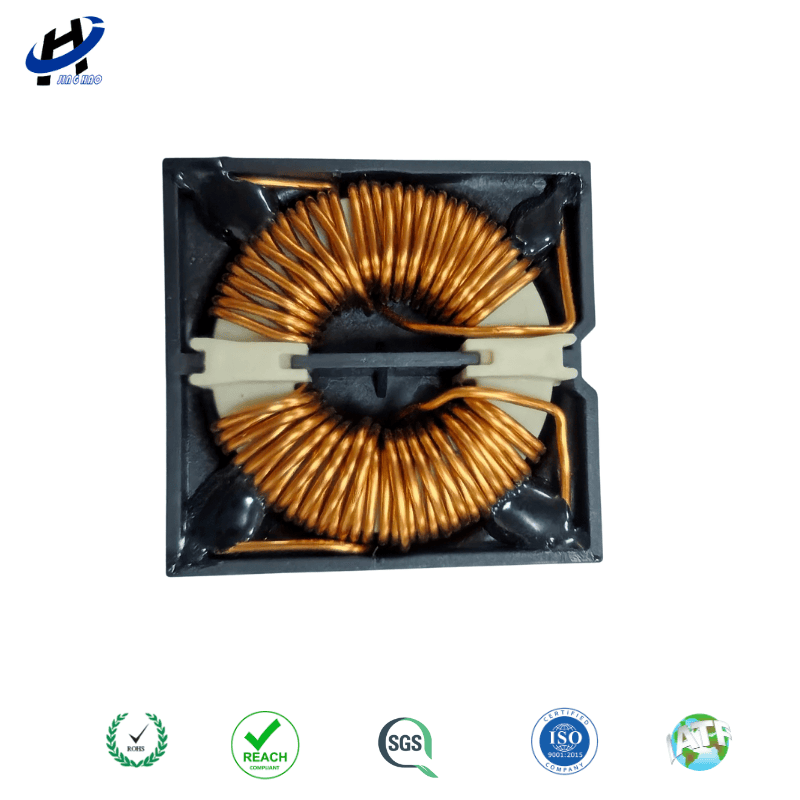
    Ferrite and nanocrystalline are not drop-in twins If you design EMI filters or power magnetics for industrial, EV, or server-class PSUs, you have lived this choice: MnZn/NiZn ferrite on one side of the bench, iron-based nanocrystalline ribbon cores on the other. Brochure tables make the swap look obvious—higher Bs, higher μ, “better EMI.” On a real CMC or inductor drawing, the materials behave differently under bias, temperature soak, and AL fixture correlation. That gap is exactly where dual-source programs either land cleanly or reopen EMC after SOP. This article is written for high-spec buyers in JP, CA, US, FR, UK, IT, RU, and similar markets who already ran VAC Vitroperm-class or Hitachi Metals Finemet-class nanocrystalline programs and now need a China OEM as engineering second source—not a cheap catalog substitute. Dongguan JH Amorphous Co., Ltd. (www.amorphousoem.com) supplies OEM/ODM amorphous and nanocrystalline cores under ISO9001:2015 and IATF 16949. We help freeze grade intent, AL/Z windows, and change control so a second source supports your filter, not quietly rewrites it. What each material actually is (in magnetics terms) Ferrite is a sintered ceramic (iron oxide plus Mn/Zn or Ni/Zn oxides). High resistivity keeps eddy currents low; shapes are moldable (toroids, E/U cores, beads). MnZn grades are the usual workhorse for power and mid-band EMI; NiZn typically pushes higher frequency at the cost of lower μ. Saturation flux density for common MnZn CMC grades sits roughly in the ~0.3–0.5 T neighborhood. Curie temperatures are relatively low, so permeability and loss can move hard as the hotspot approaches ~100–120°C—see high-temperature magnetics when ferrite derates. Nanocrystalline starts as rapidly solidified Fe-Si-B-Nb-Cu (and related) amorphous ribbon, then anneals into ~10–20 nm grains. Finished cores are usually cased or coated toroids / cut cores. Typical iron-based grades used in CMCs offer Bs around ~1.2–1.25 T class, very high initial permeability (often discussed as tens of thousands to >80,000 depending on grade and test conditions), low magnetostriction, and alloy Curie near ~570°C. The finished assembly still lives inside copper enamel, case polymer, and varnish limits—often discussed about -40°C to +140°C for the wound part. High-μ CMC grades and lower-μ energy-storage / inductor-oriented finishes are different anneal philosophies; mixing them by OD alone is the classic μ trap. Coated ribbon cores — finish and insulation belong on the drawing with grade, not as an afterthought. Comparison table: EMI / CMC / power magnetics tradeoffs Numbers below are order-of-magnitude engineering neighborhoods for discussion—always lock AL or impedance at your frequency, excitation, and fixture. Do not treat trademark alloy families as interchangeable by name; when buyers say “VAC/Finemet-class,” translate into measurable windows on the drawing. Property / decision Ferrite (typical MnZn CMC / power) Iron-based nanocrystalline (CMC-class) Composition Ceramic oxide (MnZn / NiZn) Metallic ribbon alloy (Fe-Si-B-Nb-Cu class), annealed Bs (order) ~0.3–0.5 T ~1.2–1.25 T class Initial μ (order) ~1,500–15,000 (grade-dependent) Very high (often >> ferrite; grade & test condition driven) Useful EMI band (CMC practice) Strong mid–high MHz; NiZn for HF beads Strong from tens of kHz into several MHz; broadband CM impedance Thermal / Curie story Softens near ~100–120°C hotspot class Alloy Curie ~570°C; assembly limited by Cu/case (~-40 to +140°C class) Core loss / size Higher loss → larger stack for same EMI/thermal Lower loss, fewer turns, smaller volume for high-current CM Mechanics Brittle ceramic; moldable shapes Thin ribbon; needs case/varnish; winding stress matters Relative piece cost Usually lower Higher unit price; often lower system EMI/thermal cost When it wins Modest current, cool ambient, HF-only noise, cost-sensitive SMPS High CM current, low-frequency EMI, hot EMI soaks, size-constrained OBC/inverter For choke sizing practice—AL, OD/ID/HT, casing, and impedance bands—use the common mode choke selection guide. Product-family context for wound CMC cores: nanocrystalline common mode choke cores. Cased nanocrystalline CMC cores — high Bs and high-μ grades for low-frequency / high-current common-mode stages. When ferrite still wins Nanocrystalline is not a blanket upgrade. Ferrite remains the right call when: Noise is high-frequency and current is modest. NiZn beads and small MnZn CMCs often cover MHz-range conducted/radiated issues without paying for high Bs. Hotspot stays cool. If thermal mapping shows the core well below the ferrite soft region, μ collapse is not your limiter—copper or layout may be. Shape and gap freedom matter more than Bs. Complex E/U geometries, adjustable gaps, and multi-gap stacks are mature in ferrite tooling. Cascade filters already mix materials. Many industrial EMI stages use ferrite on the HF end and nanocrystalline on the low-frequency / high-current CM stage. Replacing both with one alloy because of a brochure is rarely optimal. Cost-only consumer SMPS with loose EMI margin where requalification risk is low and ambient is gentle. Related material discussion: how core materials define CMC performance. When nanocrystalline (VAC / Finemet-class performance neighborhood) wins Use nanocrystalline when the failure mode is saturation under CM surge / bias, insufficient impedance below a few hundred kHz, or EMI that collapses after a hot soak on ferrite. Typical contexts: EV onboard chargers and DC-DC front-ends, high-power industrial inverters, compact UPS/server PSUs, and multi-frequency noise where fewer turns and higher Bs shrink the filter. Bs headroom (~1.25 T class vs ~0.4 T ferrite) lets you hold inductance under peak current that would drive ferrite soft. Language discipline for RFQs: say VAC/Finemet-class or comparable grade when you mean a performance neighborhood (high-μ CM vs inductor finish, Bs/thermal story, AL window). Do not claim trademark equivalence or identical chemistry unless your lab and legal teams have that evidence. Most dual-source programs prove fit-for-function on the wound CMC or inductor against an incumbent sample. Checklist depth: second-sourcing nanocrystalline cores—what VAC/Finemet-class buyers should freeze. Saturation, permeability, and thermal—what actually breaks EMI Saturation. Ferrite’s lower Bs means CM surge or DC bias collapses μ earlier; the choke looks fine at light load and fails under load dump or motor start. Nanocrystalline delays that collapse, but an open magnetic path, poor lead dress, or wrong AL still fails EMC. Geometry mistakes are not fixed by alloy brand heritage. Permeability. Very high μ gives high CM impedance with fewer turns (lower copper loss), yet it is also easier to mis-apply: a high-μ CMC core pressed into gapped energy-storage duty, or an inductor-oriented grade sold into a CM filter, both look “nanocrystalline” on the PO and wrong on the spectrum analyzer. Freeze magnetic role on the drawing. Thermal. Ferrite derating near ~100–120°C is a magnetic story. Nanocrystalline’s high Curie is an alloy story; the wound choke still dies from enamel, case continuous-use temperature, or copper resistivity rise. Map hotspots, then decide whether μ/Bs collapse or assembly limits dominate. Insulation and casing choices belong in the same review as grade—ceramic vs organic ribbon insulation. Gapped inductor builds need winding keep-outs from fringe fields—air-gap fringing and winding placement. Second-source drawing freeze notes (before you switch materials or suppliers) Whether you move ferrite → nanocrystalline or dual-source a Finemet-/Vitroperm-class incumbent to a China OEM, freeze these items before samples leave the plant: Role: CMC (closed-path high-μ) vs inductor / PFC (gapped or lower-μ) vs CT—not “nanocrystalline toroid.” AL or Z window at stated frequency, excitation, and fixture notes; keep a golden sample for meter correlation. Geometry stack: OD/ID/HT, case type, gap mark, lead egress for the winding house. Insulation / coating / varnish system and what triggers a PCN. Thermal & EMI validation: wound-sample delta vs incumbent (conducted/near-field as applicable) after soak. QMS path: IATF scope when automotive, agreed PPAP level, change control—see IATF 16949 and PPAP for magnetic core suppliers. OEM core assortment — freeze role (CMC vs CT vs inductor) before OD alone drives the PO. Service-over-price buyers optimize requalification risk and field EMI, not piece price alone. A China second source that hits frozen AL histograms and PCN discipline is an engineering partner; a low quote that only matches OD is a future EMC reopen. Practical decision path List noise band, I_rms / I_peak CM, ambient and hotspot budget. If ferrite EMI fails after thermal soak or under surge—shortlist nanocrystalline CMC-class cores. If noise is HF-only and current/temperature are gentle—keep ferrite or cascade both. Size AL/Z and copper; verify on the wound part, not brochure μ. For dual source after VAC/Finemet-class history: freeze the drawing list above, then correlate samples. FAQ Q1: Can I drop a nanocrystalline toroid into a ferrite CMC footprint one-for-one? Sometimes on OD/ID/HT, rarely on electrical behavior without revalidating turns, AL, leakage, and EMI. Treat it as a design review, not a catalog swap. Q2: Is nanocrystalline always better for EMI? No. It usually wins on high-current / low-frequency CM and thermal stability of the magnetic function. Ferrite can still win at HF with modest current, or in cascade stages. Q3: What does “VAC/Finemet-class” mean in an RFQ to a China OEM? A performance neighborhood and incumbent correlation target—not a claim of trademark identity. Specify role, AL/Z conditions, geometry, insulation, and EMI/thermal delta expectations. Q4: Why did my ferrite CMC pass cold and fail after soak? μ and loss often move as ferrite approaches its soft thermal region (~100–120°C class). Re-map hotspot; consider nanocrystalline if magnetic derating is the limiter. Q5: What should purchasing and engineering freeze together? Grade intent (CMC vs inductor), AL/Z window with test notes, mechanical stack, insulation/PCN rules, and validation against the incumbent. Price alone should not reopen EMC. For ferrite-to-nanocrystalline reviews or VAC/Finemet-class second-source drawing checks (AL correlation, sample planning, CMC grade selection), contact julia@amorphousoem.com — www.amorphousoem.com.
    Read More

  • Second-Sourcing Nanocrystalline Cores: What VAC / Finemet-Class Buyers Should Freeze Before Switching
    Second-Sourcing Nanocrystalline Cores: What VAC / Finemet-Class Buyers Should Freeze Before Switching
    Sep 29, 2026
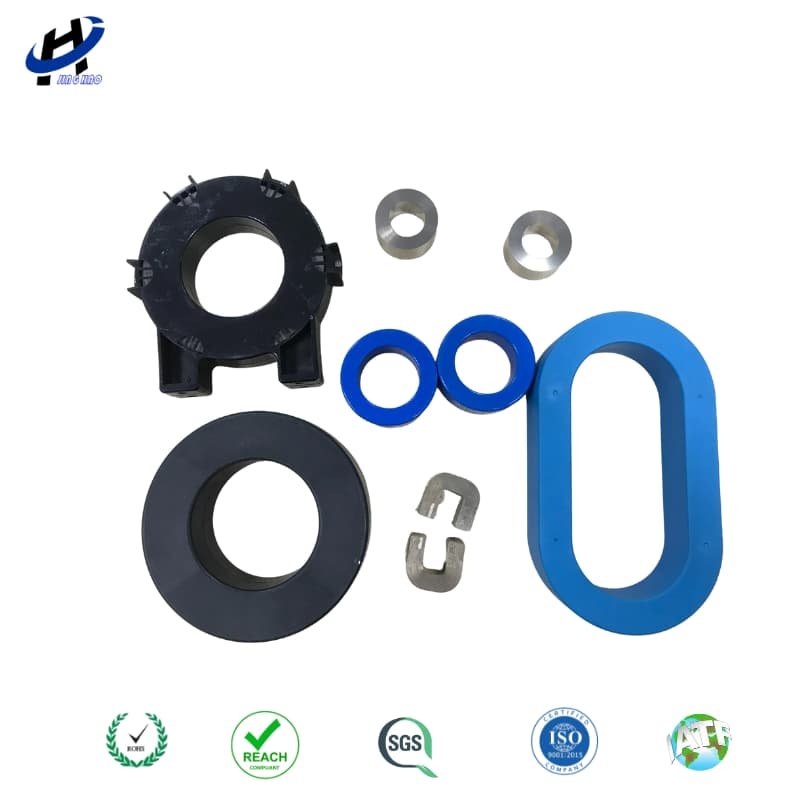
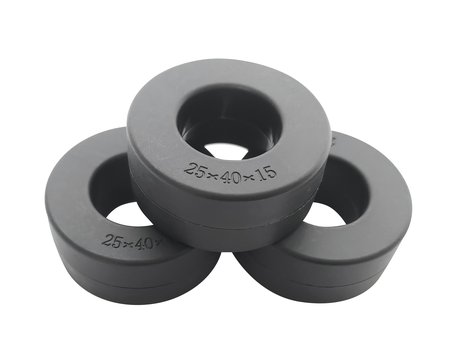
    Why OEMs second-source nanocrystalline cores now Many power and EMI designs in Japan, North America, and Europe were frozen around well-known nanocrystalline brands—often discussed in the same breath as VAC Vitroperm-class or Hitachi Metals Finemet-class materials. Those programs still need high-μ CMCs, stable AL, and predictable EMI. What changed is supply strategy: dual source, shorter sample loops, and China OEM capacity that can hit engineering windows when drawings are written tightly. Second-sourcing is not “buy the cheapest toroid labeled nanocrystalline.” It is locking the magnetic grade intent, test conditions, and change control so a China manufacturer can support—not quietly rewrite—your filter or inductor. Dongguan JH Amorphous Co., Ltd. (www.amorphousoem.com) supplies OEM/ODM amorphous and nanocrystalline cores under ISO9001:2015 and IATF 16949. This article is a buyer/engineer checklist for second source and dual source programs aimed at service-sensitive markets (US, Canada, UK, France, Italy, Japan, and similar), not a price war playbook. Buyer priority What to freeze What fails if you skip it Role: CMC vs inductor Grade family (high-μ CM vs energy-storage / lower-μ) μ trap, wrong EMI or saturation behavior Geometry OD/ID/HT, case, gap mark, lead egress Winding house scrap, harness EMI AL / Z window Test frequency, excitation, fixture notes Lots that “pass OD” fail on the bench Quality system IATF scope, PPAP level, PCN rules Quiet process drift after SOP Validation EMI/thermal delta vs incumbent sample Field returns after dual-source swap Plastic-cased toroids: second-source reviews start with magnetic role and AL windows. VAC / Finemet-class language—without false equivalence Purchasing often says “VAC alternative” or “Finemet equivalent.” Engineering should translate that into measurable targets: permeability class for CM vs DM duty, Bs and thermal story vs ferrite, core loss at your kHz, dimensional stack for the winding house, and insulation/coating system. Trademarked alloy families are not interchangeable by name. Treat them as performance neighborhoods you reverse-engineer into a drawing. Claim “same brand chemistry” only when your lab and legal teams have that evidence—most second-source programs instead prove fit-for-function on the finished CMC or inductor. Useful framing for RFQs to China OEMs: Application: CMC / PFC inductor / cut C-core / CT—not “nanocrystalline toroid.” Incumbent sample available for AL correlation and EMI delta (preferred). Target AL or impedance band at stated conditions; reject “typical μ” as the only spec. Annual volume, sample lead time, and whether PPAP (or customer PPAP-like pack) is required. Contact path to applications engineering, not only sales. Related reading on the grade mistake that kills dual-source programs: the μ trap on nanocrystalline datasheets. For automotive paperwork depth, see IATF 16949 and PPAP for core suppliers. What to put on the drawing before you dual-source Magnetic role. High-μ closed-path grades for CM impedance are not the same anneal philosophy as gapped or lower-μ energy-storage cores. If the incumbent was a CMC, do not accept an “inductor-looking” nanocrystalline with a gap unless EMI and thermal are revalidated. Cut cores and fringing need their own keep-outs—see air-gap fringing and winding placement. AL / impedance. State frequency, waveform notes, and fixture correlation. Keep a golden sample when the second source uses a different AL meter. Lot histograms beat single-point brochure numbers. Mechanicals and insulation. Case resin, varnish, ceramic vs organic ribbon insulation, and edge condition affect hi-pot, thermal, and winding damage. Ask what changes trigger a PCN. Background: ceramic vs organic insulation questions for OEM buyers. Thermal and EMI context. Ferrite may be discussed as soft near ~100–120°C; nanocrystalline alloy Curie is far higher (~570°C class), but finished assemblies still live inside copper and plastic limits (often discussed about -40°C to +140°C). Open magnetic paths and poor lead dress still fail EMC regardless of brand heritage—open-path EMI signatures and high-temperature magnetics. Coated toroids across sizes: freeze the coating/insulation system when dual-sourcing an incumbent. Validation that service-focused buyers actually run Price-insensitive customers still hate requalification surprises. A practical second-source gate: Dimensional FAIR against the frozen drawing. AL / Z distribution on N pieces from the proposed production route. Wound sample: copper rise, acoustics if relevant, and near-field or conducted EMI delta vs incumbent. Thermal soak if ferrite was in the old path or ambient is hot. Paper: certificate scope page, control-plan outline, material declarations, agreed PPAP level for automotive. Field context from programs that already exercised nanocrystalline CMCs under real EMI/thermal pressure: German 800 V EMI case, Italian EV charger thermal/EMI case. Product examples to anchor RFQs: nanocrystalline cores for common mode chokes, cut C-cores for power magnetics, CMC selection guide. Market cue What they usually optimize Supplier behavior that fits US / CA / UK Drawing discipline, English FAE, dual source risk Clear AL windows, sample speed, PCN in writing DE / FR / IT EMC + automotive/industrial QMS IATF-aware packs, EMI delta data JP Consistency, packaging, communication quality Tight tolerances, lot codes, responsive FAE Other high-spec OEMs Second source without redesign Incumbent correlation, not catalog guesswork Oval / racetrack cores: lock window and build dimensions on the drawing, not just OD. Case and base options: resin, lead egress, and mounting belong in the change-control plan. Wound CMC assembly: prove fit-for-function with EMI and thermal delta against the incumbent. FAQ Q1: Can a China OEM replace a VAC- or Finemet-class core one-for-one? Sometimes on geometry and AL windows, never by trademark name alone. Prove fit-for-function on the wound part and freeze grade intent on the drawing. Q2: What is the fastest way to fail a second-source trial? Ordering by OD and “nanocrystalline” without CMC vs inductor grade, AL test conditions, or EMI delta against the incumbent. Q3: Do we need full PPAP for every dual-source core? Automotive serial parts usually yes at the agreed level; industrial programs still need a defined approval pack and PCN rules. Details: IATF/PPAP guide. Q4: Should we dual-source different anneal philosophies? Not without full requalification. Two routes that only share OD are two different parts electrically. Q5: Who should own the RFQ—purchasing or engineering? Both. Purchasing owns commercial dual-source risk; engineering owns magnetic role, AL, and EMI. JH Amorphous expects joint reviews so piece price does not reopen EMC. For second-source or dual-source nanocrystalline / amorphous core reviews (drawing check, AL correlation, sample planning), contact julia@amorphousoem.com — www.amorphousoem.com.
    Read More
  • Mastering EMI Suppression: A Comprehensive Guide to Common Mode Chokes
    Mastering EMI Suppression: A Comprehensive Guide to Common Mode Chokes
    May 12, 2026
    In modern power electronics and high-speed data transmission, noise is the enemy of performance. Whether you are designing a medical device or an EV charging system, managing Electromagnetic Interference (EMI) is critical for regulatory compliance and signal integrity. At the heart of this challenge is a vital component: the Common Mode Choke.   What is a Common Mode Choke? A common mode choke is an electromagnetic component used to filter out high-frequency noise shared by two or more power or signal lines. It provides high impedance to unwanted "common mode" noise while allowing the intended "differential mode" signals to pass through with minimal loss. How a Common Mode Choke Works   The device consists of two insulated copper coils wound around a single magnetic core. It operates based on the principle of magnetic field interaction: Common Mode Noise: Currents flow in the same direction on both lines. Their magnetic fields reinforce each other within the core, creating high resistance that "chokes" the noise.   Differential Signals: Desired currents flow in opposite directions. The magnetic fields cancel each other out, allowing the signal to flow freely without distortion.   Selecting the Right Core Material The magnetic core is the "brain" of the choke. The material you choose—whether it’s traditional ferrite or advanced nanocrystalline—directly dictates your filter’s frequency response and thermal limits.   1. MnZn Ferrite (Manganese-Zinc) Best for: Low-to-Mid Frequency Suppression (10kHz – 30MHz). MnZn ferrite is the industry standard for general EMI filtering. Key Benefit: High initial permeability (μi up to 15,000) provides massive impedance at low frequencies. Typical Use: AC/DC power supplies and household appliance filters.   2. Nanocrystalline (e.g., 1K107) Best for: High-Density & High-Temperature Applications. Nanocrystalline cores are the premium choice for modern hardware, offering high saturation induction (~1.25T). Key Benefit: Exceptional performance in a compact footprint and high stability up to 180°C. Typical Use: Electric Vehicle (EV) onboard chargers, solar inverters, and high-performance server supplies.   3. NiZn Ferrite (Nickel-Zinc) Best for: High-Frequency & Radiated EMI (>30MHz). Key Benefit: High electrical resistivity prevents eddy current losses at MHz and GHz frequencies. Typical Use: Data lines (USB-C, HDMI, CAN bus) and communication hardware.   Technical Material Comparison Material Type Permeability (μi) Saturation (Bs) Ideal Frequency Range Footprint MnZn Ferrite 5,000 – 15,000 ~0.5 T 10kHz - 30MHz Standard Nanocrystalline 20,000 – 190,000 ~1.2 T 10kHz - 50MHz+ Compact NiZn Ferrite 100 – 1,000 ~0.3 T 30MHz - 1GHz Standard   Frequently Asked Questions   What is the difference between a common mode choke and a normal inductor? A standard inductor filters both signal and noise (differential mode). A common mode choke specifically targets noise shared across lines while leaving the actual signal untouched.   When should I use Nanocrystalline instead of Ferrite? Choose nanocrystalline cores if your design has strict space constraints or operates in high-temperature environments. They offer superior energy density compared to traditional MnZn ferrites.   Reference: https://www.amorphousoem.com/blog/common-mode-choke-inductor-design-a-strategic-guide-to-high-performance-magnetics Need a Custom EMI Solution? Selecting the right material is essential for passing CISPR 32 or Class B limit lines. Contact our engineering team today to discuss custom core specifications for your next project.
    Read More
  • Why Do Nanocrystalline Cores Stay Rock Solid Under High Current? — The Truth Behind Magnetic Saturation
    Why Do Nanocrystalline Cores Stay Rock Solid Under High Current? — The Truth Behind Magnetic Saturation
    Nov 13, 2025
    Discover why nanocrystalline cores outperform traditional magnetic materials under DC bias and high current. This article explains their anti-saturation behavior, supported by real customer cases and B-H curve analysis for transformers, inductors, and EMC filters. In magnetic component design, one of the biggest challenges engineers face isn’t cost — it’s magnetic saturation. Under high current or DC bias, once the core saturates, inductance drops, losses rise, and EMI performance collapses.   Recently, one of our EV charger clients faced this exact problem. Their common mode choke was overheating and failing EMI tests. Testing revealed that the high-permeability permalloy core was severely saturated under DC bias, leading to a sharp decline in effective permeability. We suggested switching to nanocrystalline cores.  But after reviewing the B-H curves, the difference was undeniable: High-μ alloys magnetize quickly but saturate under strong magnetic fields; Nanocrystalline materials maintain permeability stability even under heavy DC bias; Low-μ ferrites resist saturation but lack sufficient inductance for high-power systems. The results were remarkable:✅ EMI margin improved by 40%✅ Core temperature dropped by 15°C✅ No redesign required ✳️ Why Nanocrystalline Cores Perform Better Nanocrystalline alloys feature ultra-fine grains (10–20 nm), resulting in smooth domain wall motion, low hysteresis loss, and stable permeability.Key properties include: High saturation flux density (1.2 T) Medium to high permeability (μ ≈ 80K ~ 190K) Excellent DC bias tolerance Strong temperature stability ( -40 ~ 140 degree) That’s why nanocrystalline cores are ideal for: Common mode chokes (EMC filters) Power inductors High-frequency transformers EV chargers, inverters, and power modules In short, nanocrystalline materials achieve the perfect balance between permeability and saturation resistance — keeping magnetic cores rock solid under current.   🏭 About JH Amorphous JH Amorphous is a professional manufacturer specializing in nanocrystalline and amorphous magnetic cores, serving global customers in transformers, inductors, common mode chokes, and EMC filter applications.We focus on delivering high-performance, customizable core solutions to help engineers design magnetic components that remain stable and efficient even under high current, high frequency, and harsh conditions.   👉 Visit our website or contact our export team to learn more about JH Amorphous products and technical support.JH Amorphous — Your Trusted Partner in Advanced Magnetic Materials.
    Read More

leave a message

leave a message
If you are interested in our products and want to know more details,please leave a message here,we will reply you as soon as we can.
submit

home

products

WhatsApp

Contact