homepage
Leave A Message
If you are interested in our products and want to know more details,please leave a message here,we will reply you as soon as we can.
submit
banner
Home

Blog

Blog

  • The Real Grid Challenge Behind AI — Why Smarter Materials Matter
    The Real Grid Challenge Behind AI — Why Smarter Materials Matter
    Oct 22, 2025
    Explore how nanocrystalline magnetic cores empower next-generation transformers, inverters, and filters. Boost efficiency, minimize heat, and achieve higher performance in AI data centers and renewable energy systems.   AI is transforming industries at an unprecedented speed — but behind every leap in computing power lies an equally dramatic rise in energy demand. Across data centers and cloud infrastructure, power consumption is growing faster than most electrical grids were ever designed to handle. As highlighted in Howard Penrose’s “Grid Breaking Point: The True Cost of AI’s Energy Addiction”, the world’s digital progress is now pressing up against the limits of our physical energy systems. And our previous blog talked about it , too.    For operators, utilities, and engineers, this isn’t just a matter of capacity. It’s a question of stability, efficiency, and long-term reliability. The combination of high-frequency switching, fluctuating loads, and rising thermal stress is placing tremendous pressure on transformers, inverters, and other critical components. Upgrading grid infrastructure will take years — but smarter engineering choices can deliver meaningful impact right now.   That’s where advanced soft magnetic materials, such as nanocrystalline magnetic cores, are starting to make a real difference.   Nanocrystalline cores combine ultra-high permeability with exceptionally low losses, even at high frequencies. They enable more compact, efficient, and thermally stable designs for transformers, chokes, and filters — components that sit at the heart of every data center, EV charger, and renewable power converter. By improving how efficiently these devices handle energy, we can reduce heat generation, extend equipment lifetime, and minimize harmonic distortion that stresses upstream grid assets.   For customers operating high-density power systems — whether in AI infrastructure, industrial automation, or energy storage — this translates to tangible benefits: Higher efficiency and lower operating costs Improved reliability under dynamic or fluctuating loads Reduced thermal management requirements Longer equipment lifespan and lower maintenance risk   Every percentage point of efficiency gained inside a transformer or inverter contributes directly to grid stability and sustainability. In many cases, that improvement comes not from new infrastructure, but from better materials and smarter design.   As AI and electrification continue to accelerate, the power grid’s future resilience will depend on choices made at every level — from system planning to the materials inside each component. By integrating nanocrystalline technology into next-generation power devices, we can help our customers build systems that are not only more powerful, but also more efficient, reliable, and ready for the challenges ahead.   About Dongguan JH Amorphous Co., Ltd. Dongguan JH Amorphous Co., Ltd. is a professional manufacturer specializing in amorphous and nanocrystalline magnetic cores and parts.We serve industries including power electronics, renewable energy, automotive electrification, and industrial automation, offering both standard and custom magnet solutions. Contact Information:📧 julia@amorphousoem.com🌐 www.amorphousoem.com   Author:Julia YimInternational Marketing ManagerDongguan JH Amorphous Co., Ltd.  
    Read More

  • How Coating Affects Nanocrystalline Cores: Performance, Process, and Innovation | JH Amorphous
    How Coating Affects Nanocrystalline Cores: Performance, Process, and Innovation | JH Amorphous
    Oct 22, 2025
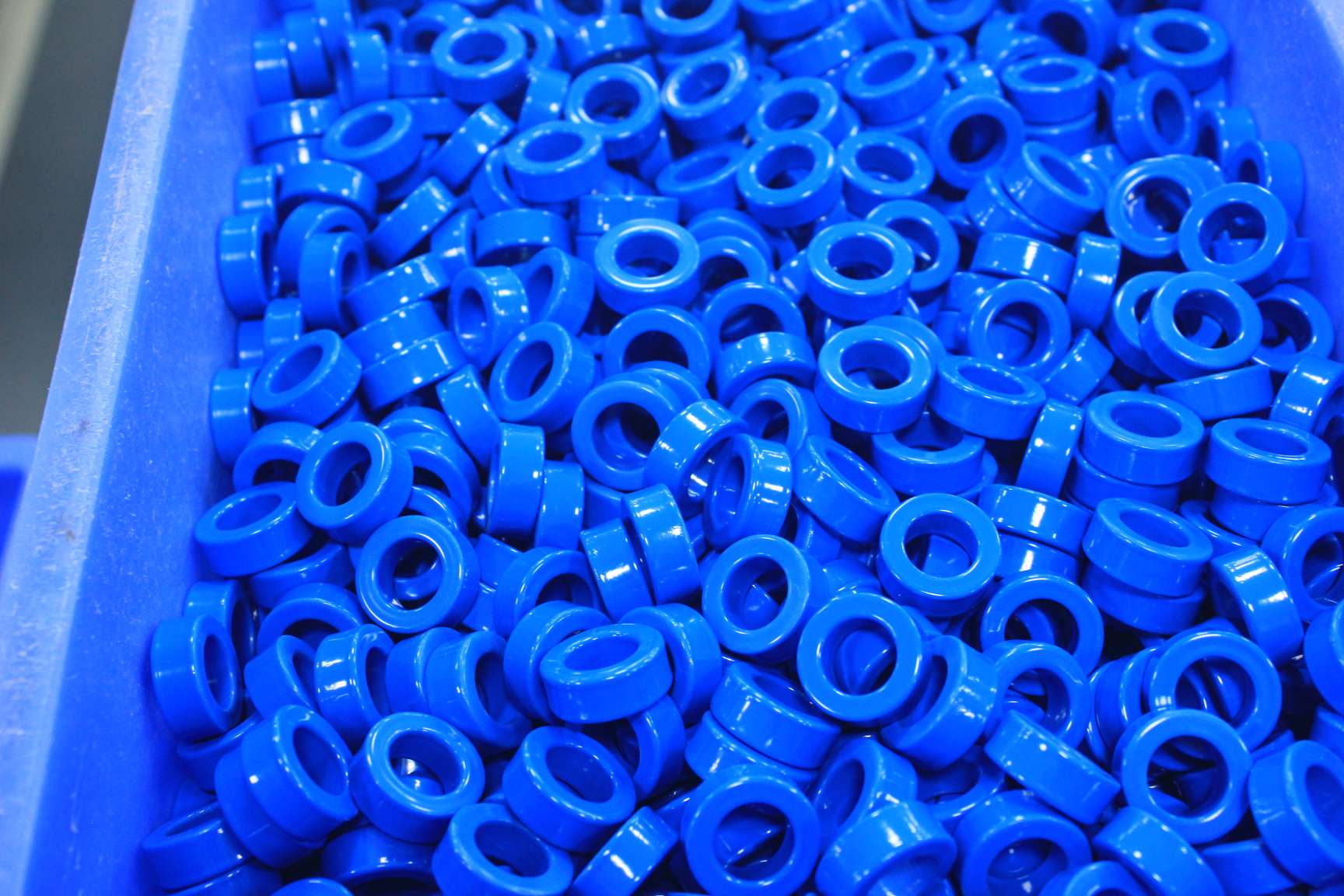
    Learn how coating impacts nanocrystalline cores in terms of performance, magnetic properties, and production efficiency. Discover how JH Amorphous optimizes coating technology for stability, cost-effectiveness, and innovation.   Nanocrystalline cores are essential in modern magnetic materials used in transformers, inductors, and other electronic devices. While their internal structure defines the magnetic properties, the coating applied to the core also plays a major role in determining performance, durability, and cost efficiency.   For high-quality nanocrystalline cores, coating materials must meet strict performance requirements. During the coating process, the layer should not create excessive stress that can damage the core. Once cured, the coating needs to offer high hardness, dimensional stability, good adhesion, insulation, and solvent resistance. These characteristics help maintain magnetic stability and ensure reliable performance throughout the product’s lifetime.   Because nanocrystalline cores often have ring-shaped structures, flexibility, and no chamfer, the coating process must be carefully selected. A dual-sided spraying method is often used to achieve uniform coverage across all magnetic surfaces, including edges and corners. This approach minimizes coating stress and prevents uneven thickness, which can lead to magnetic distortion or cracking. Proper control of parameters such as spray angle, coating viscosity, and curing temperature ensures both functional and aesthetic quality.   The coating also directly influences magnetic performance. Stress, coating thickness, and uniformity can all affect properties like magnetic permeability, core loss, and coercivity. Even small inconsistencies may cause changes in these parameters, reducing performance and efficiency. By optimizing coating parameters, manufacturers can minimize these effects and maintain stable magnetic characteristics. At JH Amorphous, advanced process control is used to ensure that every coating application supports the core’s intended performance.   Beyond performance, the coating process affects production efficiency and cost. Factors such as equipment speed, coating utilization, and material waste determine overall productivity. By optimizing these elements, JH Amorphous achieves higher throughput, lower waste, and more consistent quality. The result is a more efficient and sustainable manufacturing process that benefits both production and performance goals.   Continuous innovation is key to staying ahead in nanocrystalline technology. JH Amorphous continues to explore new coating materials and automated processes that enhance insulation, adhesion, and durability while maintaining environmental responsibility and cost-effectiveness. Through these efforts, the company delivers reliable and energy-efficient nanocrystalline cores that meet the evolving demands of global industries.     Coating may appear to be a small step in manufacturing, but it has a major impact on how nanocrystalline cores perform in real-world applications. Every layer counts — and with the right materials, processes, and innovation, coating becomes a crucial factor in achieving superior magnetic performance and long-term stability.   Video link:  https://www.amorphousoem.com/video/the-impact-of-coating-on-nanocrystalline-cores About Dongguan JH Amorphous Co., Ltd. Dongguan JH Amorphous Co., Ltd. is a professional manufacturer specializing in amorphous and nanocrystalline magnetic cores and parts.We serve industries including power electronics, renewable energy, automotive electrification, and industrial automation, offering both standard and custom magnet solutions. Contact Information:📧 julia@amorphousoem.com🌐 www.amorphousoem.com   Author:Julia YimInternational Marketing ManagerDongguan JH Amorphous Co., Ltd.
    Read More
  • A Tale of Two Coatings: Exploring Surface Technologies for Nanocrystalline Cores
    A Tale of Two Coatings: Exploring Surface Technologies for Nanocrystalline Cores
    Oct 20, 2025
     Discover the difference between Electrostatic Powder Spraying and Powder Rolling coatings for nanocrystalline cores. Learn how Dongguan JH Amorphous Co., Ltd. enhances performance, reliability, and winding protection through advanced coating technologies.   In the world of magnetic materials, details matter — especially when it comes to protecting and enhancing high-performance nanocrystalline cores.At Dongguan JH Amorphous Co., Ltd., we continuously refine our processes to help customers achieve the perfect balance of performance, durability, and cost efficiency. Recently, our engineering team compared two coating methods widely used in our nanocrystalline core production. Both provide robust protection, but each brings unique advantages depending on your application.   Coating A: Electrostatic Powder Spraying Coating This traditional technique uses electrostatically charged powder sprayed onto the core surface, followed by high-temperature curing. Key Features: Surface: Slightly uneven with minor texture — functional but not perfectly smooth. Edges: Sharper draft angles. Cost: More economical, ideal for cost-sensitive projects. Wire Compatibility: Suitable for standard wire diameters. Best suited for: Projects that prioritize cost efficiency and standard magnetic performance.   Coating B: Powder Rolling Coating A more advanced process, powder rolling ensures a uniform, tightly bonded coating layer with superior surface quality. Key Features: Surface: Exceptionally smooth, providing both visual appeal and functional precision. Edges: Rounded R-angles that are gentle on copper wire during winding. Cost: Slightly higher, reflecting the enhanced precision. Wire Compatibility: Can handle thicker copper wire, allowing more design flexibility. Best suited for: Applications demanding premium finish, higher wire tolerance, and improved durability.   Why Coating Quality Matters The coating layer might look simple, but it plays a crucial role in: Improving electrical insulation Reducing mechanical wear Preventing EMI interference Extending core lifespan A well-applied coating ensures smoother winding, fewer production defects, and more reliable magnetic performance in power electronics, EV chargers, and renewable energy converters.   The JH Amorphous Commitment At JH Amorphous, we believe that perfection lives in the details.From raw material design to precision coating, every step reflects our dedication to efficiency, consistency, and customer success. Our R&D team works closely with global partners to deliver customized amorphous and nanocrystalline core solutions, optimized for next-generation energy and industrial applications. About Dongguan JH Amorphous Co., Ltd. Dongguan JH Amorphous Co., Ltd. is a professional manufacturer specializing in amorphous and nanocrystalline magnetic cores and parts.We serve industries including power electronics, renewable energy, automotive electrification, and industrial automation, offering both standard and custom magnet solutions. Contact Information:📧 julia@amorphousoem.com🌐 www.amorphousoem.com   Author:Julia YimInternational Marketing ManagerDongguan JH Amorphous Co., Ltd.
    Read More
  • Can Nanocrystalline Cores Thrive in Harsh Outdoor Environments?
    Can Nanocrystalline Cores Thrive in Harsh Outdoor Environments?
    Sep 17, 2025
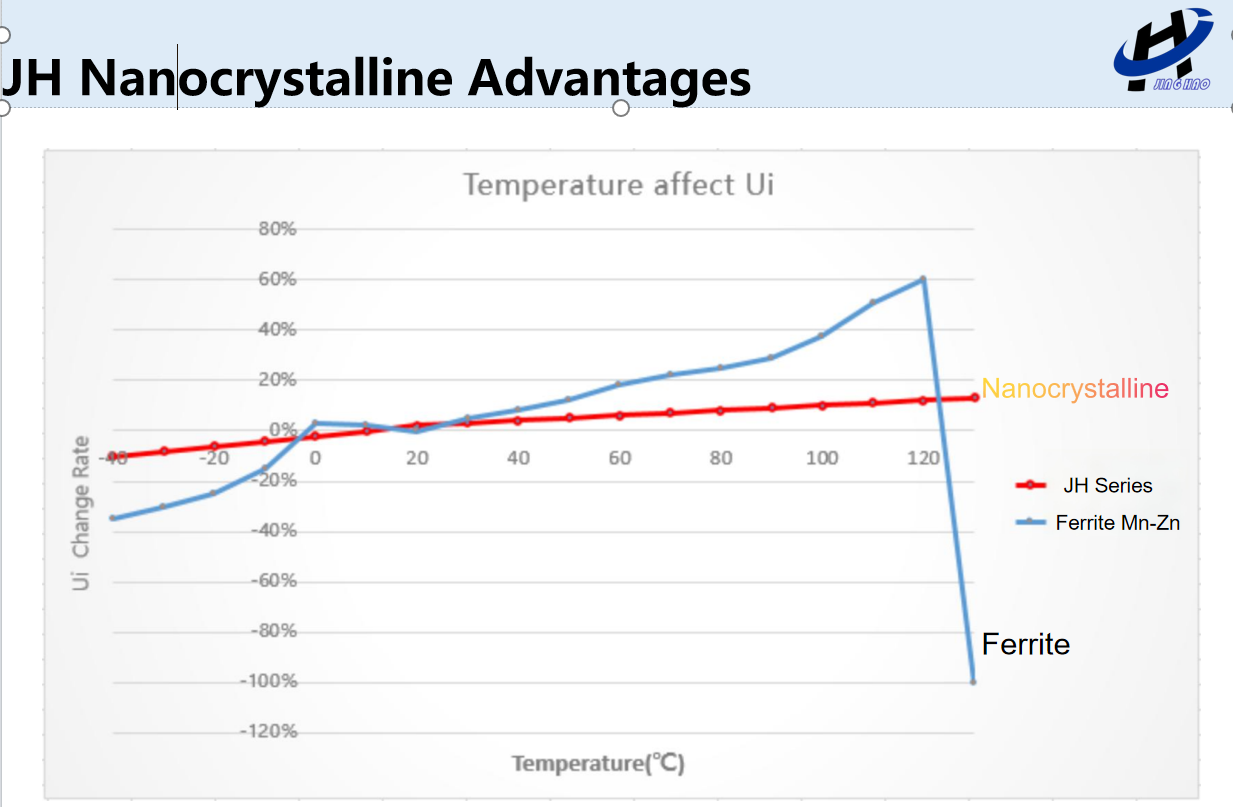
    Explore why nanocrystalline cores, especially the 1K107B alloy, outperform ferrites in extreme outdoor environments. Discover their advantages in thermal stability, durability, and efficiency for high-power electronics.   1.What Makes an Environment “Harsh” for Electronics? Outdoor applications often expose components to a trio of stressors:- Thermal extremes: Temperatures ranging from -40°C to 140°C (or more).- Mechanical vibration: From wind, traffic, and nearby equipment.- Moisture and contaminants: Dust, rain, and corrosive elements can degrade components quickly.For magnetic cores, this means performance must remain stable despite these factors. And that’s exactly where nanocrystalline materials shine.   2. Why Nanocrystalline Cores Stand Out Nanocrystalline alloys such as 1K107B offer:- Exceptional thermal stability with Curie temperatures up to 570°C—far better than ferrites (~120°C to 300°C depending on type).- Wide operating temperature range from -40°C to 140°C, ideal for outdoor gear.- Low core loss, meaning less internal heat under load and reduced risk of overheating.   3. Performance Matters: The Case for 1K107B The 1K107B nanocrystalline alloy is engineered for high-frequency, high-current environments. It offers:- High saturation flux density (1.2 T), outperforming ferrites (<0.5 T).- Lower magnetostriction to reduce noise and mechanical stress.- Protective coatings like PA66 or epoxy resin to resist water and dust.   4. Nanocrystalline vs Ferrite Cores: A Quick Comparison Here’s a quick reference: Feature Nanocrystalline Core Ferrite Core Saturation Flux Density >1.2 T <0.5 T Curie Temperature ~570°C 120°C–300°C Operating Temp Range  -40°C to 140°C  -40°C to 125°C Permeability ~80,000 5,000–10,000  Core Loss @ High Freq.   Low High   5. Final Thoughts: Durability Depends on Both Material and Manufacturer While the raw material matters, so does the manufacturer’s process—from heat treatment to protective coating. Choosing a trusted supplier ensures quality.Dongguan JH Amorphous Co., Ltd. delivers consistent, high-performance nanocrystalline cores for EV chargers, solar inverters, and outdoor power systems.Get in touch with our engineers—we’ll help you match the right core to your toughest project.
    Read More
  • Why is my PTC heater noisy?
    Why is my PTC heater noisy?
    Sep 11, 2025
    In electric vehicles (EVs), passenger comfort and energy efficiency are key design considerations. High voltage PTC (Positive Temperature Coefficient) heaters are widely used for cabin heating and battery thermal management. However, many engineers face a persistent issue: excessive noise and EMI interference generated by PTC heater modules. Why Do PTC Heaters Generate Noise? High voltage PTC heaters operate at 400V–800V and involve fast switching electronics. These factors can lead to multiple noise sources:- EMI Noise: Switching spikes from MOSFETs/IGBTs cause common mode and differential mode interference.- Buzzing & Humming: Magnetostriction and vibration effects.- High-Frequency Whine: Audible tones caused by poor filtering or PCB layout resonances. Traditional Solutions and Their Limits Engineers have tried:- Ferrite cores (low cost but limited performance at high frequencies)- Shielding and PCB layout optimization- Oversized inductors (increase cost and weight) Why Nanocrystalline Cores Are the Answer Nanocrystalline magnetic cores offer:- High Permeability (μ up to 80,000) for EMI suppression- Low core loss at high frequencies- Compact size for space-saving- Proven use in EV chargers, DC/DC converters, and now PTC heaters Case Example: EV Heater Noise Suppression A Tier-1 automotive supplier struggled to pass EMC testing for their high voltage PTC heater. The noise spectrum showed severe issues at 150 kHz–300 kHz and 30 MHz–110 MHz, where ferrite materials are less effective. After replacing ferrite beads with nanocrystalline toroidal cores (OD 4 × ID 2.5 × H 2.5 mm):- EMI noise across these bands was successfully suppressed- Overall EMI reduced by 40%- Temperature rise decreased by 15 °C under full load- Compact design enabled 30% space savingMost importantly, the heater module passed EMC certification and entered mass production.   High voltage PTC heaters are critical in EVs for cabin comfort and battery thermal management. Engineers facing EMI or acoustic noise issues should consider nanocrystalline cores as a proven, scalable solution. Our team provides samples with IATF 16949 standard, technical support, and long-term supply to help your project succeed.     
    Read More
  • 191125 Size Nanocrystalline Magnetic Core for Automotive Inductor: Reliable Speed-Limiting Solution for EV and Car Electronics
    191125 Size Nanocrystalline Magnetic Core for Automotive Inductor: Reliable Speed-Limiting Solution for EV and Car Electronics
    Aug 26, 2025
    With the rapid growth of electric vehicles (EVs) and intelligent automotive systems, the demand for high-performance inductors has never been greater. Automotive electronics require components that deliver stable inductance, low power loss, and long-term reliability under harsh conditions. Among them, the 191125 size nanocrystalline magnetic core  inductor stands out as an excellent solution for speed-limiting inductor applications, onboard chargers, and automotive power management modules. This article provides a comprehensive overview of the product’s features, advantages, and application value in the evolving automotive industry. 1. What is the 191125 Size Nanocrystalline Core for Inductor? The 191125 nanocrystalline magnetic core is designed bear core outside dia. 19mm, inner dia. 11mm, height 25mm, Fe-based nanocrystalline 1K107B material. At a working frequency of 100KHz, it delivers a stable inductance value ranging between 52μH and 73μH. The product is optimized for automotive-grade environments, ensuring consistent performance even under extreme conditions such as high temperature, vibration, and electromagnetic interference. In automotive applications, speed-limiting inductors are critical to electromagnetic compatibility (EMC). They help suppress high-frequency noise and stabilize current flow, preventing malfunctions in sensitive electronic systems. By adopting nanocrystalline material, the 191125 inductor combines compact size with superior magnetic performance. 2. Advantages of Nanocrystalline Magnetic Core Compared with traditional ferrite cores, nanocrystalline cores offer significant benefits: High Permeability: Enables higher inductance values with fewer turns, saving space and reducing cost. Low Core Loss: Ensures excellent efficiency at high frequencies, making it suitable for EV power electronics. Temperature Stability: Maintains consistent inductance over wide operating ranges (-40°C to +150°C). Superior EMI Suppression: Effectively reduces noise, ensuring system-level stability in automotive circuits. These properties make nanocrystalline cores ideal for EV power conversion systems, DC/DC converters, onboard chargers, and noise suppression circuits. 3. Key Specifications of the 191125 Nanocrystalline core Size(mm): bear core: OD:19  ID:11  HT: 25 , Coated finished core:  OD:19.5  ID:10.5  HT: 25.5 Structure: wound nanocrystalline core Frequency Range: Optimized for 100KHz operation Single Inductance Value: 52μH – 73μH Application Focus: Automotive speed-limiting inductors, EV power management modules, onboard charging units Such specifications prove the product’s suitability for automotive-grade performance, ensuring reliability in demanding EV systems. 4. Automotive Application Scenarios a. Electric Vehicles (EVs) The 191125 nanocrystalline inductor plays a critical role in EV motor control systems and battery management modules, where stable inductance ensures smooth current handling and improved energy efficiency. b. Automotive Power Management Modules In DC/DC converters and inverters, stable inductance minimizes ripple current, reduces heat generation, and improves overall system reliability. c. Speed-Limiting Inductor Applications As part of EMC compliance, speed-limiting inductors filter noise spikes and protect circuits against interference, ensuring safe vehicle operation. d. Onboard Chargers & Charging Stations In OBCs and fast-charging systems, inductors with low loss and high stability improve charging efficiency and extend battery life. 5. Why Choose the 191125 Nanocrystalline core for Automotive Inductor? Automotive-Grade Reliability: Designed for high vibration, temperature, and humidity environments. Stable Inductance Range: 52–73μH at 100KHz ensures predictable and efficient performance. Long Lifespan: Nanocrystalline core materials reduce wear and degradation over time. Energy Efficiency: Lower losses help optimize EV range and reduce heat dissipation. Broad Applicability: Suitable for EVs, hybrid vehicles, onboard chargers, and smart automotive systems. 6. Market Trend and Industry Outlook The global automotive inductor market is expanding rapidly, driven by the adoption of EVs, hybrid cars, and intelligent vehicle platforms. According to industry forecasts, demand for automotive-grade inductors will grow at double-digit rates over the next five years. Nanocrystalline inductors are expected to dominate future applications due to their superior performance in high-frequency, high-power environments. The 191125 nanocrystalline core for inductor is well positioned as a reliable choice for next-generation EV power electronics. The 191125 size nanocrystalline magnetic core for automotive inductor core combines stable inductance (52–73μH), low core loss, EMI suppression, and automotive-grade durability, making it the ideal solution for speed-limiting applications and other car electronics. For more insights, contact JH Amorphous engineer team via sales@amorhpousoem.com.    As the world moves toward greener, smarter, and more energy-efficient transportation, choosing high-performance inductors is critical. The 191125 inductor not only enhances vehicle reliability but also contributes to safer driving and sustainable mobility.
    Read More
  • Common Problems with Onboard Chargers (OBCs) in Electric Vehicles and How Nanocrystalline Cores Solve Them
    Common Problems with Onboard Chargers (OBCs) in Electric Vehicles and How Nanocrystalline Cores Solve Them
    Aug 25, 2025
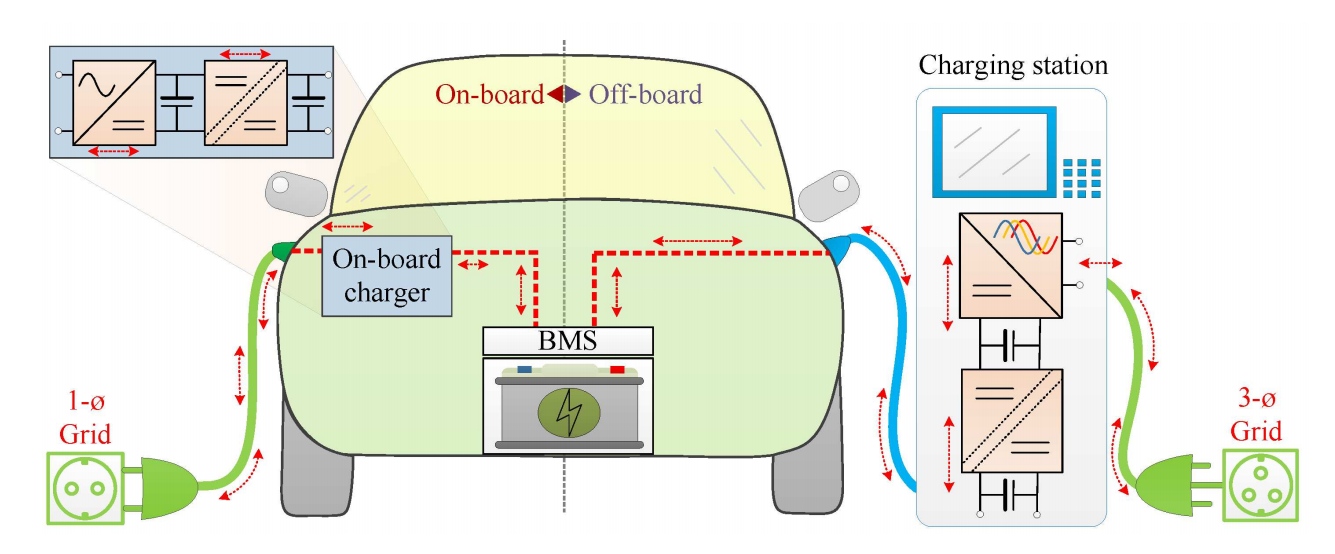
    Introduction to Onboard Chargers (OBCs) and Their Role in Electric Vehicles Onboard Chargers (OBCs) are a critical part of electric vehicles (EVs), converting AC electricity from the grid into the DC power needed to charge the vehicle's high-voltage battery. As EV demand grows, the need for faster and more efficient charging has increased, which brings new challenges to OBC designs. These challenges are primarily related to heat management and electromagnetic interference (EMI), both of which can severely impact the performance and lifespan of OBCs. This article discusses the common problems associated with OBCs and how nanocrystalline cores provide an effective solution. The Key Problems in OBCs: Heat and Electromagnetic Interference Overheating and Performance Degradation A major concern for OBCs is heat, which results from the energy losses that occur during power conversion. Excessive heat can cause components to degrade faster and force the system to throttle its performance to avoid damage. This can reduce the overall efficiency of the vehicle's charging system and lead to increased failure rates in the power electronics. For instance, when operating at maximum capacity, OBCs can experience failure rates that are 40% higher than at normal operating levels, primarily due to overheating. Electromagnetic Interference (EMI) High-speed switching, a characteristic feature of OBCs, generates EMI. This interference can disrupt the vehicle's other sensitive electronic systems, such as communication buses and infotainment units, leading to potential malfunctions. Modern power semiconductors, like GaN (Gallium Nitride) and SiC (Silicon Carbide), operate at high frequencies, generating electromagnetic noise in the 2.4 GHz and 5 GHz bands, which requires highly efficient filtering solutions.   How Nanocrystalline Cores Solve the Heat and EMI Issues Reducing Heat Generation: The Role of Nanocrystalline Cores Nanocrystalline cores have an exceptional ability to reduce core losses, which are responsible for generating heat. Their grain structure, which is much smaller than conventional magnetic materials, results in significantly lower core losses, reducing heat generation by up to 1000 times compared to traditional materials. This reduction in heat allows OBCs to operate at higher power levels without the need for bulky cooling systems, which leads to a more compact and efficient design. Suppressing Electromagnetic Interference (EMI) Nanocrystalline cores excel in EMI suppression due to their high permeability. This allows them to absorb high-frequency noise over a broad range of frequencies, making them ideal for use in common-mode chokes (CMCs) designed to filter out EMI. By improving noise suppression, nanocrystalline cores ensure that the OBC can meet stringent EMC standards and maintain the integrity of the vehicle's electronic systems.   Nanocrystalline Cores vs. Traditional Ferrite Cores: A Comparative Analysis Parameter Nanocrystalline Cores Ferrite Cores Saturation Flux (Bs) 1.2T 0.4T Max Operating Frequency ≥1 MHz <200 kHz Curie Temperature ∼570°C ∼120°C DC Bias Performance >80%@100 Oe 20%@100 Oe Size/Weight 50% weight, 75% size reduction No significant reduction Cost Lower system-level cost Higher due to additional cooling components     The Future of OBC Design with Nanocrystalline Cores Nanocrystalline cores are poised to revolutionize the design of onboard chargers for electric vehicles. By addressing the critical challenges of overheating and EMI, they enable the development of more efficient, compact, and reliable OBCs. This innovation is key to advancing EV technology and supporting the growing demand for faster, more efficient charging solutions.
    Read More
  • How a 20×15×10mm Nanocrystalline Core Increased Profits by 5%
    How a 20×15×10mm Nanocrystalline Core Increased Profits by 5%
    Aug 20, 2025
    Introduction In the competitive electronics industry, passive component manufacturers are constantly seeking ways to improve performance, reliability, and efficiency. One recent case demonstrates how the adoption of a 20×15×10mm nanocrystalline core not only met technical requirements but also delivered measurable business results. Background: The Customer’s Challenge A leading passive component manufacturer faced challenges with core efficiency and stability. Their existing solutions could not meet the growing demand for: Higher inductance in a compact size Lower energy losses Improved long-term reliability They needed a material that could deliver superior performance while maintaining cost-effectiveness. The Solution: Switching to a Nanocrystalline Core The customer decided to test a 20×15×10mm nanocrystalline core. This core, wound with high-quality copper wire, provided: High magnetic permeability for better inductance Low core losses at operating frequencies Compact size with strong performance The design change required minimal process adjustments, making integration smooth and efficient. Results: Measurable Business Impact The results were immediate and impactful: ✅ Enhanced product performance — Stable inductance and lower loss improved the customer’s final components. ✅ High customer satisfaction — End-users noticed the reliability, leading to positive feedback. ✅ Repeat orders — The customer reported continuous reorders after the switch. ✅ Profit growth — With stronger product competitiveness, profits increased by 5%. Customer Feedback The customer shared that the nanocrystalline core exceeded expectations: “By integrating the nanocrystalline core, our components gained a real edge in the market. Our clients are satisfied, and we’ve seen steady repeat business.” Why Choose Nanocrystalline Cores? This case illustrates the strategic value of nanocrystalline technology: 🌟 Higher efficiency compared to traditional ferrite or FeSiAl cores 🌟 Compact size without compromising performance 🌟 Proven reliability and durability 🌟 Direct business benefits — from customer trust to profit growth Conclusion The success of this 20×15×10mm nanocrystalline core application highlights the power of advanced materials in driving both technical and commercial results. For passive component manufacturers, adopting nanocrystalline cores can mean not just better performance, but also stronger customer loyalty and improved profitability.   👉 If you are looking for ways to enhance efficiency and gain a competitive advantage, nanocrystalline cores are a proven solution.
    Read More
  • Why Big Power Users Challenge the Grid – and How New Core Materials Provide the Answer
    Why Big Power Users Challenge the Grid – and How New Core Materials Provide the Answer
    Aug 18, 2025
    Introduction Large energy consumers such as data centers, AI hubs, crypto farms, and hydrogen plants are changing the way electricity is used worldwide. These “mega-loads” bring economic growth but also create new risks for the power grid based on NERC white paper. This article explores: What problems these large loads create Why traditional transformers are not enough How amorphous and nanocrystalline cores provide the solution What Problems Do Emerging Large Loads Cause? 1. Harmonics – electrical noise Power electronics generate harmonics: unwanted signals that heat transformers, waste energy, and shorten lifespan. 2. Reactive Power – grid instability Cooling systems and drives cause reactive power that “pushes and pulls” on the grid, making voltage harder to stabilize. 3. Rapid Load Fluctuations AI clusters and mining rigs swing their demand suddenly, creating shocks for the grid. 4. Transformer Overheating Silicon steel transformers were never designed for these stresses. They overheat, fail early, and increase downtime costs. Why Are Traditional Transformers Not Enough? Traditional transformers are mainly built with silicon steel cores, a material that has served the grid reliably for decades. These designs were optimized for steady, predictable power flows—like lighting, motors, and household appliances. But the new reality is very different: Nonlinear loads: Data centers and crypto rigs don’t draw current in smooth waves. Instead, they create jagged, pulsed patterns that silicon steel cores struggle with. High core losses: When harmonics are present, silicon steel cores lose much more energy as heat. This not only wastes electricity but also drives up cooling needs. Shorter lifespans: Transformers overheat faster and age prematurely. This means more frequent replacements, higher maintenance budgets, and unplanned downtime. Grid mismatch: Traditional transformers cannot easily adapt to the fast fluctuations of AI clusters or renewable inputs like solar and wind. 👉 In short: the old designs were never made for the “digital” and “green” loads of today. What Are Amorphous and Nanocrystalline Cores? These are next-generation magnetic materials designed to meet modern grid demands. Instead of the crystalline structure of silicon steel, they have unique atomic arrangements that reduce losses and handle complex waveforms better. Amorphous cores Structure: Atoms are arranged randomly, not in a fixed crystal lattice. Benefit: This irregularity makes it much harder for magnetic domains to move, which drastically reduces energy lost as heat. Application: Best for distribution transformers where energy efficiency over 24/7 operation is critical. Nanocrystalline cores Structure: Extremely fine grains, on the nanometer scale, giving them unique magnetic softness. Benefit: Excellent performance at higher frequencies, strong resistance to harmonics, and stable under fluctuating loads. Application: Ideal for reactors, high-performance transformers, and power electronics in AI, EV charging, and renewable energy.   Together, these materials are redefining transformer design. They allow utilities and industries to cut losses by up to 70–80%, improve reliability, and prepare for the electrification and digitalization of everything—from AI to hydrogen. How Do These Materials Solve the Problem? Energy efficiency: Reduce wasted energy, supporting global carbon goals. Harmonic resilience: Keep transformers stable under noisy loads. Lower temperatures: Prevent overheating and extend lifespan. Green energy integration: Handle solar and wind variability smoothly. Applications in the Real World Data centers & AI hubs: High reliability with lower costs. Crypto mining & hydrogen plants: Avoid failures, improve ROI. Urban power grids: Reduce energy losses across entire networks. Conclusion Emerging large loads are reshaping electricity demand, but they don’t have to weaken the grid. With amorphous and nanocrystalline core technology, we can make power systems smarter, greener, and more resilient.   👉 Key takeaway: Advanced magnetic materials are no longer optional—they’re essential for the digital and renewable era.  
    Read More
  • Nanocrystalline Amorphous Materials in Power Systems: From Manufacturing to Customer Value
    Nanocrystalline Amorphous Materials in Power Systems: From Manufacturing to Customer Value
    Aug 16, 2025
    In the context of global energy transition and power system modernization, industries and research communities are striving to balance energy efficiency, equipment reliability, and measurement accuracy. This article takes a deep dive into the manufacturing principles of nanocrystalline amorphous materials, their role in power transformers and metering units, and addresses common customer concerns when adopting these advanced solutions. 1. What Are Nanocrystalline Amorphous Materials? Traditional metallic materials are crystalline in nature, meaning atoms are arranged in a regular lattice. Amorphous alloys (also known as metallic glasses), however, are produced by rapid quenching, freezing atoms in a disordered, liquid-like structure without forming crystals. With further nanocrystallization treatment, tiny nanometer-sized grains precipitate within the amorphous matrix, combining the high resistivity of amorphous structures with the superior magnetic properties of crystalline phases. 📌 Key properties: High resistivity → reduces core loss High magnetic permeability → excellent soft-magnetic performance Structural stability → improved long-term reliability Cost-effectiveness → scalable for industrial applications 2. Manufacturing Process of Amorphous Strip To appreciate the value of nanocrystalline amorphous alloys, it is essential to understand how they are made. The typical process includes: 1️⃣ Vacuum MeltingMaster alloys are melted in a vacuum environment to prevent oxidation and contamination. 2️⃣ Precision CastingThe molten alloy flows through a tundish and a precisely designed nozzle onto a rapidly rotating copper wheel. Parameters such as temperature, nozzle width, and nozzle-to-roll distance are tightly controlled. 3️⃣ Ultra-rapid CoolingUpon contacting the copper roll, the molten alloy cools at over 1000°C per millisecond. The atoms are "frozen" in a disordered state, forming an amorphous structure. 4️⃣ Continuous Strip ProductionThe solidified strip is rolled, cut to required widths, and coiled automatically. 5️⃣ Heat TreatmentTailored annealing eliminates internal stresses and enables nanocrystallization, enhancing uniformity and performance. This automated, continuous process enables large-scale, consistent production of high-performance amorphous materials. 3. Application Scenario I: Energy-Efficient Transformers Transformers are a major source of energy loss in power systems. Conventional silicon steel cores have relatively high no-load losses. In contrast, amorphous alloy transformers significantly reduce losses. Silicon steel transformers → higher no-load losses Amorphous alloy transformers → reduce no-load losses by 70–80% Nanocrystalline core transformers → further optimize both loss and compactness 📌 Customer value: Lower operating energy costs Extended equipment lifespan Compliance with green, low-carbon policies 4. Application Scenario II: Metering Units A common misconception is confusing transformers with metering units. Yet their roles are fundamentally different. Transformers → step voltage up or down (e.g., from 11 kV to 415 V) for safe power delivery. Metering units → designed for measurement and monitoring, housing instrument transformers (CTs and PTs) that scale down current and voltage into safe, measurable values. Here, material accuracy and stability directly impact billing fairness and grid safety. Using amorphous or nanocrystalline cores inside CTs and PTs provides: High measurement accuracy (low phase error) Temperature stability (ensuring long-term consistency) Safety (preventing overheating or magnetic saturation errors) 📌 Customer value: Transparent and fair billing Higher sensitivity in grid protection Compliance with IEC/ANSI international standards 5. Common Customer Questions & Solutions Q1: Are amorphous transformers worth the higher initial cost compared with silicon steel?✅ Yes. Despite slightly higher upfront investment, their lifecycle energy savings (over ~30 years) make them more economical overall. Q2: Will nanocrystalline cores in metering units be too sensitive and unstable?✅ No. Optimized heat treatment ensures a balance between accuracy and stability, preventing measurement drift. Q3: Can amorphous materials be deployed at scale?✅ Already widely used in utilities, renewable energy systems, smart grids, and data centers, proving their industrial viability. 6. Future Outlook and Trends Smart Grids → Amorphous and nanocrystalline cores will be central to smart metering and intelligent transformers. Electric Vehicles (EVs) → Demand for high-frequency magnetic materials is increasing, where nanocrystalline alloys offer superior low-loss characteristics. Renewable Energy → Wind and solar systems require efficient power conversion, driving adoption of amorphous alloys. 7. Conclusion Under the global push for energy transition and carbon neutrality, nanocrystalline amorphous materials are emerging as vital enablers in transformers, metering units, and beyond. Customer significance: Reduced operational costs through energy savings Trust and transparency via accurate metering Improved reliability and safety of power infrastructure   This is not just a breakthrough in materials science — it is a cornerstone for sustainable power system development.  
    Read More
  • Nanocrystalline Cores for EMI Suppression in EV Heater Systems – Design Guid
    Nanocrystalline Cores for EMI Suppression in EV Heater Systems – Design Guid
    Aug 14, 2025
    In electric vehicle (EV) thermal management systems, the EV heater is a key high-voltage component. However, its switching operation and high power levels generate significant electromagnetic interference (EMI), which can impact overall electromagnetic compatibility (EMC) compliance.   Among available magnetic materials, iron-based nanocrystalline cores (such as FINEMET®, 1K107B) are increasingly popular for common-mode chokes (CMCs), current transformers, and localized magnetic shielding. Their high permeability, low loss, and thermal stability make them especially effective in specific EMI suppression scenarios.   When to Use Nanocrystalline Cores Dominant Common-Mode Noise (10 kHz – 5–10 MHz): Ideal for HV input lines and harnesses between EV heater, DC/DC converter, and OBC. High-Temperature Environments: Stable performance at 85–105°C. Compact Size Requirements: Smaller core size or fewer turns to meet impedance targets. Localized Magnetic Shielding: Tape-wound shields reduce leakage flux and radiated EMI.   When Not to Use (or Use with Caution) Differential-Mode Filtering/Energy Storage: Susceptible to DC saturation; better use gapped ferrite or powder cores. Very High Frequency EMI (>10–20 MHz): NiZn ferrite often more cost-effective. Harsh Mechanical Shock/Cost-Sensitive: Brittle and higher cost; requires careful mounting.   Typical EV Heater Applications HV+/HV− Common-Mode Choke Measure noise spectrum using LISN and CISPR 25 limits. Calculate impedance target and required inductance. Check leakage inductance, temperature rise, and saturation margin.   Harness Clamp-On Cores Installed close to noise sources or chassis entry points; affects only common-mode currents.   Localized Magnetic Shielding Wrap tape shields around noisy components; ground appropriately to reduce coupling.   Material Comparison Table Material μᵢ Range Bₛₐₜ (T) Frequency Strength DC Bias Tolerance Typical Uses Nanocrystalline 10⁴–10⁵ ~1.2 10 kHz–10 MHz Fair CMC, shielding, CT MnZn Ferrite 10²–10³ ~0.45 100 kHz–5 MHz Fair CMC, gapped energy storage NiZn Ferrite 10–10² ~0.35 5–100+ MHz Fair High-frequency suppression Powder Cores 10–100 0.8–1.5 Stable under DC bias Strong Differential-mode inductors   For more details about nanocrystalline core info., click https://www.amorphousoem.com/product/fe-based-1k107-42525mm-nanocrystalline-bead-for-spike-suppression
    Read More
  • The Role and Application of Nanocrystalline and High Flux Cores in Inverter Design
    The Role and Application of Nanocrystalline and High Flux Cores in Inverter Design
    Aug 05, 2025
     Introduction: Powering the Future with Advanced Magnetic Cores   Inverters are at the heart of renewable energy systems, electric vehicles, and high-efficiency industrial power supplies. Their performance depends critically on the magnetic components within—transformers, chokes, inductors—all of which are driven by the material properties of their cores. Among the most advanced options available today are nanocrystalline and high flux magnetic cores. This article explores their roles in inverter systems, comparing their strengths and ideal applications, and guiding engineers on how to use them strategically to build smaller, more efficient, and more reliable power electronics.     Nanocrystalline Cores: Precision and Efficiency in Inverter Design Nanocrystalline cores are formed by annealing iron-based amorphous ribbons, resulting in ultra-fine microstructures with exceptional magnetic properties. They feature high initial permeability (5,000–31,000 µr at 100kHz), ultra-low core losses in the 10–100kHz range, and a high saturation flux density (1.23–1.32 T), which is 2–3× higher than ferrite. These characteristics enable designers to achieve compact, thermally stable, and power-dense inverter systems. Advantages in Inverter Applications • Low core loss reduces heat generation and energy waste.• High permeability supports efficient energy transfer in compact circuits.• High Bs enables operation under demanding loads with reduced risk of saturation.• Wide temperature stability (–40°C to 140°C) and high Curie point (570°C) support robust thermal management.• Ideal for EMI suppression in common mode chokes and current transformers. Typical Applications • EV chargers and solar inverters• High-frequency transformers and common mode chokes• UPS systems, EMC filters, and industrial power supplies  High Flux Cores: Robustness for High Power and DC Bias Applications High Flux cores, composed of 50% nickel and 50% iron alloy powder, are engineered for inductive components exposed to high current and DC bias. With a Bs of 1.5 Tesla, they outperform ferrite and MPP in energy storage and DC bias handling. They exhibit soft saturation characteristics, low-to-medium core losses, and strong thermal stability. Advantages in Inverter Applications • High DC bias tolerance makes them ideal for PFC chokes and output inductors.• 1.5T saturation flux density allows for fewer windings and compact inductors.• Soft saturation ensures consistent performance under varying loads.• Supports system cost reduction by minimizing copper usage and cooling needs. Typical Applications • PFC inductors and DC-link inductors• Switching regulator inductors• In-line noise filters and flyback transformers• Industrial inverters, including welding machines Choosing the Right Core: Nanocrystalline vs. High Flux Each material excels in different parts of an inverter design. While nanocrystalline cores are best for high-frequency, low-loss applications such as transformers and EMI filters, high flux cores are superior for high-current inductors and energy storage elements. A hybrid design using both materials delivers optimal performance. Comparative Overview • Nanocrystalline: High permeability, low loss, thermal efficiency, ideal for transformers and chokes.• High Flux: High Bs, strong DC bias performance, suitable for inductors in PFC and high-current lines.  Designing with Purpose and Precision Nanocrystalline and high flux magnetic cores are shaping the future of power electronics. By understanding their complementary roles and strategically deploying each in the right place, engineers can design more compact, reliable, and efficient inverter systems. At Dongguan JH Amorphous Co., Ltd., we provide tailored solutions for next-generation inverters, empowering innovation in clean energy, EV, and industrial automation sectors.   👨‍🏭 Author:   Julia YimInternational Marketing ManagerDongguan JH Amorphous Co., Ltd.📧 julia@amorphousoem.com | 🌐 www.amorphousoem.com        
    Read More
1 2 3

leave a message

leave a message
If you are interested in our products and want to know more details,please leave a message here,we will reply you as soon as we can.
submit

home

products

WhatsApp

Contact